Looking for the best tools to track and measure ABM success? Here's a breakdown of the top 10 ABM attribution platforms that help marketers analyze multi-touch interactions, align sales and marketing efforts, and drive revenue. These tools provide insights into the buyer journey, from first touch to closed deals, and cater to businesses of all sizes.
Highlights:
- Karrot AI: Focuses on buying committee insights and AI-driven attribution for complex sales cycles.
- 6sense: Combines intent data with predictive analytics to identify high-value accounts.
- Terminus: Offers multi-channel ABM campaign management and detailed segmentation.
- HubSpot: Simplifies attribution for teams already using its CRM and marketing tools.
- RollWorks: Scales ABM efforts with multi-touch attribution and programmatic ad tracking.
- Demandbase: Tracks account-level engagement and leverages AI for targeting.
- Clearbit: Enhances ABM strategies with firmographic and technographic data enrichment.
- LeanData: Specializes in lead-to-account matching and routing for accurate attribution.
- Foundry ABM: Focuses on intent data and account engagement scoring.
- Google Analytics 4 (GA4): General-purpose analytics with basic attribution capabilities.
Each tool varies in features, integrations, and pricing. Whether you're starting with ABM or managing complex enterprise strategies, there's a solution tailored to your needs.
How Can I Track LinkedIn ABM Campaign Performance With KPIs? - Get Linked Together
1. Karrot AI
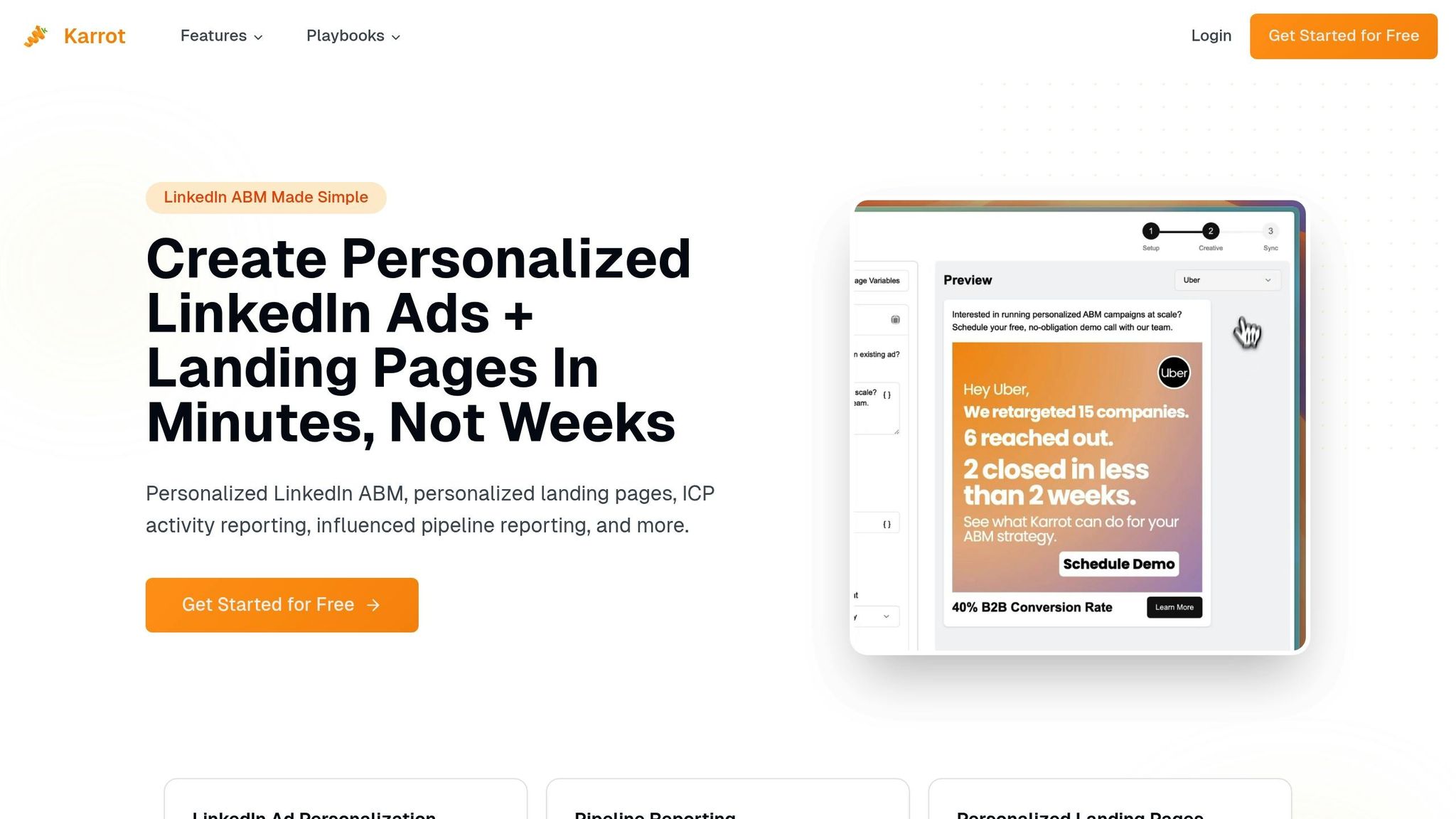
Karrot AI is an ABM attribution platform designed to tackle the challenges of measuring success in complex buying committees and extended sales cycles.
Rather than just tracking interactions, this platform focuses on what truly matters in account-based marketing: speeding up the pipeline and closing deals. It helps identify which engagements push target accounts forward in the buying process and contribute to revenue growth.
ABM-Specific Features
Karrot AI offers an account-focused dashboard that provides real-time engagement insights. Its AI-driven engine fine-tunes attribution using actual deal data, making it highly effective.
The platform is particularly skilled at mapping out relationships among decision-makers, identifying the key touchpoints that build consensus and drive decisions. It also provides real-time optimization recommendations, giving actionable insights that help marketers adjust campaigns on the fly.
Integration with Martech Stacks
Karrot AI is designed to integrate smoothly into existing technology setups.
It connects effortlessly with popular ABM platforms and CRMs, meaning you won’t need to overhaul your current tools. By pulling data from these systems, it creates a unified view of account engagement, bridging the gap between marketing and sales teams and reducing data silos.
Implementation and Ongoing Support
Karrot AI offers a tailored implementation process and consistent support, aligning the platform with your specific sales strategies and goals. It positions itself as a partner in achieving measurable results.
Pricing and Scalability
While exact pricing isn’t disclosed, the platform’s enterprise-level features and personalized support suggest it’s best suited for mid-market to large organizations with established ABM strategies. Its AI capabilities become increasingly valuable as it learns and adapts to your company’s evolving sales processes over time.
2. 6sense
6sense stands out in the world of account-based marketing (ABM) for enterprises by combining intent data with attribution modeling to predict which accounts are most likely to convert - and when they might do so.
What sets 6sense apart is its ability to identify buying signals from both anonymous and known account interactions. By collecting and analyzing this data, the platform helps marketing teams gain a clearer picture of how accounts are engaging, paving the way for more precise account-level insights.
ABM-Specific Functionality
6sense takes an account-first approach, focusing on organizations rather than individual leads - a critical component for successful ABM strategies. The platform enriches contact lists automatically and segments users into groups based on their behavior.
By tracking activity across various channels and tying it back to specific accounts, 6sense sheds light on how members of a buying committee interact with marketing content. This is especially useful in B2B sales, where decisions often involve multiple stakeholders.
Its AI-powered engine uses deep intent signals and firmographic data to pinpoint high-value accounts and predict their progression through the buyer journey.
The platform’s account-level reporting zeroes in on key ABM metrics, such as engagement levels, buying committee activity, journey progression, and conversion rates. These insights are tightly aligned with sales objectives and revenue outcomes.
Integration Capabilities with Existing Martech Stacks
6sense integrates seamlessly with CRMs, marketing automation tools, and analytics platforms. It pulls data from various sources, updates contact lists, and synchronizes information back into connected systems, ensuring that account-level insights are accessible to both marketing and sales teams.
For organizations already using 6sense, its attribution features work smoothly with other platform capabilities, making it easier to incorporate these insights into daily workflows. Additionally, the platform offers robust support for a seamless adoption process.
Implementation and Support Quality
To help organizations get started, 6sense provides a free demo and pre-setup consultation to customize configurations based on account hierarchy and high-value criteria. Given its advanced account intelligence and predictive features, implementation often requires technical setup, including defining account hierarchies, identifying high-value accounts, and configuring attribution models.
Pricing and Scalability
Pricing for 6sense depends on factors like the number of users, use cases, and the scope of account intelligence required. The cost typically scales with the number of accounts being monitored, the depth of insights needed, and the size of the user base.
Designed primarily for large enterprises with complex technology ecosystems and mature ABM programs, 6sense helps justify ABM investments by tying advertising spend directly to pipeline results. Its ability to identify high-value accounts and forecast buyer journeys can cut down on wasted marketing dollars by focusing efforts on accounts with the highest potential. For companies targeting enterprise accounts with multi-stakeholder buying committees, 6sense delivers measurable value by speeding up sales cycles and improving win rates.
3. Terminus

Terminus stands out among multi-touch attribution tools by offering a complete suite of account-based marketing (ABM) features, from identifying target accounts to delivering detailed reporting. Unlike platforms that narrowly focus on attribution, Terminus is designed to help teams manage multi-channel campaigns seamlessly from beginning to end.
One of its key strengths is the Prospect Engine, which uses intent signals and account data to pinpoint the most promising accounts. By analyzing these insights, marketing teams can concentrate their efforts on accounts with the highest likelihood of conversion. This not only optimizes budget usage but also boosts return on investment (ROI).
ABM-Specific Functionality
Terminus excels in delivering personalized content based on intent data, ensuring tailored messaging across various touchpoints. Its built-in database eliminates the need for external data sources, simplifying campaign setup and ensuring consistent data management. This integrated data layer enables quick access to account-level insights, reducing the time needed to launch campaigns effectively.
The platform also provides advanced segmentation options, including buyer intent targeting. The Prospect Engine doesn’t just identify accounts - it also pinpoints key contacts within those accounts. This allows for more precise outreach to multiple decision-makers, a critical feature for B2B sales where buying decisions often involve several stakeholders.
Terminus supports multi-channel engagement, offering detailed account-level pipeline reporting that highlights revenue influence. Marketing teams can track how different touchpoints and channels contribute to moving accounts through the sales funnel. This insight helps refine ABM strategies to focus on tactics that drive results for high-value accounts.
Integration Capabilities with Existing Martech Stacks
Terminus is built to integrate smoothly with existing marketing technology systems. It syncs effortlessly with CRMs and supports a variety of digital ad formats. This compatibility ensures that Terminus can slot into most martech stacks without requiring significant system overhauls.
Implementation and Support Quality
Setting up Terminus is more straightforward compared to many point solutions. However, organizations should allocate time for onboarding tasks like configuring account lists, establishing personalization rules, and integrating with existing systems.
The built-in database further simplifies the process by reducing the need for manual data entry or external enrichment tools, enabling quicker campaign launches and faster time-to-value.
Pricing and Scalability
Terminus offers flexible pricing that scales based on the number of users, target accounts, and selected features. It’s a suitable choice for organizations ranging from mid-market businesses to large enterprises.
The platform is particularly effective for B2B companies with complex sales cycles involving multiple stakeholders. Its ability to manage coordinated, multi-channel engagement across high-value accounts makes it an excellent fit for organizations with mature marketing operations and a focus on account-based strategies.
4. HubSpot

HubSpot Marketing Hub brings multi-touch attribution into a platform that many marketing teams already rely on daily. By integrating attribution into your CRM, marketing automation, and sales tools, it simplifies tracking and analyzing your campaigns. G2 highlights it as a top choice for multi-touch attribution, making it an appealing option for businesses aiming to measure ABM (Account-Based Marketing) performance without switching platforms. Below, we’ll dive into HubSpot’s ABM-specific features, integration capabilities, support options, and pricing.
HubSpot tracks interactions across various touchpoints - emails, ads, website visits, and content downloads - giving you a clear picture of how these channels contribute to account conversions. This insight helps you pinpoint which activities effectively move accounts through your pipeline.
ABM-Specific Functionality
HubSpot supports a variety of attribution models, including customizable ones, to provide detailed account-level insights. Its real-time reporting links specific activities directly to deals, helping you understand which touchpoints drive progress.
The platform also offers real-time personalization, allowing you to tailor content based on account activity. For instance, if an account shows interest in a particular product or topic, HubSpot can automatically adjust website content or email messaging to keep communication relevant as the account moves through different stages of the buying process.
By analyzing attribution data, you can allocate resources more effectively, directing budgets toward the channels that generate the most engagement.
Integration Capabilities with Existing Martech Stacks
HubSpot’s all-in-one design ensures that attribution integrates smoothly into your existing workflows. It syncs with tools like Salesforce and Marketo and supports a variety of ad formats, helping to eliminate data silos. With attribution data seamlessly shared across marketing automation, sales enablement, and CRM functions, your sales team gains valuable visibility into what actions are driving accounts forward.
Implementation and Support Quality
HubSpot’s user-friendly interface and strong support network make it easy for teams to adopt its attribution features with minimal downtime. However, since HubSpot is designed as a generalist platform, it may lack some of the advanced features found in more specialized tools.
Pricing and Scalability
HubSpot offers tiered pricing plans that grow with your business. For companies already using HubSpot, attribution features can be added without the need for extra tools. For specific pricing details, including user counts and feature options, you’ll need to contact HubSpot directly.
5. RollWorks
RollWorks is an ABM platform that combines account intelligence, advertising, and multi-touch attribution. It tracks performance across programmatic ads, email campaigns, and websites, offering a Multi-Touch Attribution Template to map buyer journeys and highlight the touchpoints driving conversions. With a LinkedIn-first approach, it provides clear, company-level metrics to help identify which interactions move accounts through the pipeline.
What makes RollWorks stand out is its ability to scale without adding unnecessary complexity. The Multi-Touch Attribution Template offers a structured way to analyze buyer journeys, making it particularly helpful for organizations evolving from basic to more advanced ABM strategies.
ABM-Specific Functionality
RollWorks offers built-in sales intelligence and account grading tools that allow you to score and prioritize accounts based on fit and engagement. These grading capabilities focus your team’s efforts on high-value opportunities by analyzing firmographic data, technographics, and engagement signals.
Its account-based advertising feature enables you to deliver personalized ads to decision-makers across multiple channels. By blending account intelligence with advertising orchestration, RollWorks ensures that your messaging reaches the right people at the right stage of their journey. This targeted strategy often leads to higher engagement rates and better use of your marketing budget compared to traditional demand generation methods.
Additionally, RollWorks provides detailed attribution and reporting for both pipeline and revenue. It tracks engagement across various touchpoints, linking marketing activities directly to pipeline creation and revenue. The platform's reports show how campaigns impact buying committee engagement, account progression, and deal closures.
Integration Capabilities with Existing Martech Stacks
RollWorks integrates seamlessly with major CRMs, marketing automation platforms, and advertising channels. For example, it offers instant HubSpot sync with precise deal matching. This ensures that both marketing and sales teams have real-time access to unified account data and engagement metrics.
The platform’s ability to sync data across systems allows teams to stay aligned and informed about target accounts, streamlining collaboration and decision-making.
Implementation and Support Quality
While RollWorks offers a wide range of features, unlocking its full potential requires a detailed setup process. The time needed for implementation depends on your organization’s size, existing data infrastructure, and ABM goals.
During onboarding, RollWorks’ support team typically assists with setting up account hierarchies, configuring scoring models, and ensuring proper data mapping across systems. To make the most of the platform, it’s important to allocate resources for implementation, including project management and collaboration between marketing and sales teams. Comprehensive training for your team can also help accelerate adoption and improve results.
Starting with a smaller set of target accounts and gradually expanding your program can help your team gain expertise while demonstrating ROI before scaling further.
Pricing and Scalability
RollWorks is designed for mid-market to enterprise organizations and can grow with your ABM needs. Pricing is available upon request and depends on factors like user count, feature requirements, and the scale of your program. Costs are typically based on user seats, account limits, and feature tiers.
To get a clear idea of pricing, it’s best to request a demo tailored to your specific needs. Costs may vary based on the number of target accounts, desired features, and integration requirements. RollWorks’ scalability ensures that as your organization grows, you can expand your ABM efforts without needing to switch platforms, making it a practical choice for businesses looking to increase their investment in account-based marketing over time.
6. Demandbase
Demandbase combines account intelligence, AI-driven targeting, and multi-channel engagement to identify high-value accounts using intent signals and firmographic data.
Its predictive targeting, powered by AI, identifies opportunities early by analyzing in-market signals and intent data. This forms the backbone of its specialized account-based marketing (ABM) capabilities.
ABM-Specific Functionality
Demandbase provides advanced attribution and reporting tools tailored to measure the impact of ABM efforts on pipeline and revenue. It tracks how ABM activities contribute to these metrics, directly connecting marketing efforts to tangible outcomes. Its account intelligence tools offer insights into the structure of buying committees within target accounts, enabling precise engagement throughout the customer lifecycle.
The platform’s personalization engines dynamically adapt content based on account activity, supporting customized strategies across channels like account-based advertising, web personalization, and sales outreach. Teams can also monitor metrics such as buying committee engagement, content consumption trends, and the pace at which accounts progress through the buying journey, helping refine ABM strategies over time.
Integration Capabilities with Existing Martech Stacks
Demandbase integrates seamlessly with key marketing tools, enhancing its usability within existing systems. It works with platforms like Marketo Engage and 6sense to deliver personalized, timely interactions. Additionally, it connects with intent data providers like Bombora to improve account identification and scoring. The platform also supports integrations with CRM systems, marketing automation tools, and advertising channels, ensuring a unified flow of data across systems.
Implementation and Support Quality
Given its extensive features, implementing Demandbase can be complex. Proper configuration and training are critical to fully leverage its capabilities. Change management plays a key role in ensuring both marketing and sales teams can adapt effectively. Allocating dedicated resources or working with implementation experts can simplify the process. Starting with pilot programs focused on a subset of target accounts can help teams gain experience and demonstrate early results.
Pricing and Scalability
Pricing is customized based on factors such as company size, the number of target accounts, and required features. Its scalability makes it well-suited for organizations with complex ABM needs and larger budgets.
Demandbase is particularly beneficial for B2B companies offering high-value solutions, where account-level targeting and personalization are essential for driving ROI. Industries with long sales cycles, multiple decision-makers, and high deal values - like enterprise software, professional services, financial services, and technology - are likely to see the most benefit. Organizations with established marketing operations and the resources to invest in enterprise ABM platforms will find its features and attribution capabilities invaluable.
sbb-itb-6e7333f
7. Clearbit
As account-based marketing (ABM) attribution becomes more advanced, having reliable data is essential for accurate measurement. Clearbit steps in as a data enrichment and account intelligence platform, providing the critical data layer that many organizations rely on for ABM success. It specializes in offering detailed firmographic, technographic, and contact information that supports broader ABM strategies and attribution efforts.
Clearbit enhances records with valuable details like company information, technology usage, and organizational structure. This enriched data allows attribution models to more precisely connect marketing activities to specific accounts and their key decision-makers.
ABM-Specific Functionality
Clearbit's strength lies in its data enrichment capabilities, which play a pivotal role in ABM attribution. Rather than focusing on native campaign reporting, Clearbit enriches your existing account records with in-depth firmographic and technographic data. This helps improve account identification and provides insights into buying committees.
When a new lead enters your system, Clearbit adds critical details like company size, industry, revenue, and technology stack. This enriched information makes it easier to tie marketing touchpoints to the right accounts and decision-makers.
A standout feature is Clearbit's technographic data, which reveals the tools and platforms used by target accounts. This insight allows you to create more tailored messaging and identify the best channels for engagement. It also helps map out the decision-makers and influencers within your target accounts.
For multi-touch attribution, Clearbit ensures accurate tracking by associating every touchpoint with the correct account and contact. With this enriched data, you can segment interactions by account characteristics, monitor engagement across buying committee members, and determine which marketing tactics resonate most effectively with specific accounts. This data forms the backbone of precise multi-touch attribution across various channels.
Integration Capabilities with Existing Martech Stacks
Clearbit integrates effortlessly with your existing marketing technology stack. It connects seamlessly with CRM systems, marketing automation platforms, and analytics tools, enriching account and contact data in real time.
For example, Clearbit works directly with major CRM platforms, giving marketing and sales teams access to enhanced account intelligence without needing to switch between tools. As new leads come in, Clearbit enriches their records with additional data points before they’re passed to your sales team or used in marketing workflows.
The platform’s API ensures that enriched data flows automatically into the tools where campaigns are executed and attribution is measured. Buying committee details, intent signals, and account insights are directly integrated, making sure enriched information is always accessible where decisions are made. These integrations streamline workflows and ensure that enriched data is fully utilized.
Implementation and Support Quality
Clearbit provides strong implementation support to help organizations incorporate data enrichment into their ABM processes. A free demo is available for prospective customers, offering a chance to see how its capabilities align with their needs.
Setting up Clearbit involves mapping data fields, configuring API connections, and establishing data governance protocols. The support team guides you through these technical steps, though the complexity of implementation depends on your existing martech setup and the number of systems involved.
Many organizations choose to start with a pilot program, enriching a smaller subset of accounts to test data quality and integration before scaling up to their full database.
Pricing and Scalability
Clearbit’s pricing model is tailored to your organization’s specific needs, including data volume and integration requirements. Pricing details are available upon request, and the platform is designed to scale as your data enrichment demands grow - whether you’re expanding your target account list or deepening your ABM efforts.
Clearbit also ensures compliance with data privacy regulations like GDPR and CCPA. By sourcing data from legitimate business databases and public records, it provides enriched information that meets regulatory standards. This allows ABM teams to confidently use the data for targeting and personalization without concerns about privacy violations.
8. LeanData
When leads pour into your marketing system from various channels, directing them to the right sales rep at the right moment becomes crucial for ABM success. LeanData serves as a lead routing and account intelligence platform that connects your marketing automation tools with your CRM system. Its primary focus is on accurate lead-to-account matching, ensuring every lead lands with the correct sales representative while maintaining attribution accuracy.
The platform shines in its ability to match leads to accounts and route them based on specific criteria like account fit, territory, or the makeup of the buying committee. This accuracy directly influences attribution quality - when leads are tied to the right accounts and routed efficiently, your attribution models can better link marketing efforts to account progression and revenue. This precision in routing lays a solid foundation for more effective ABM attribution.
ABM-Specific Functionality
LeanData is designed to match leads to accounts with precision and ensure they are routed to the appropriate sales rep.
It also excels in managing multiple contacts from the same account, giving you a complete view of account engagement. For ABM campaigns targeting multiple decision-makers within a single account, LeanData keeps these relationships intact. This means you can see the full scope of engagement, rather than treating each lead as a separate interaction.
The platform also supports account-level reporting by offering insights into lead routing accuracy and the time it takes to route leads. This data helps you identify which marketing channels and campaigns are driving leads to high-value accounts, enabling you to fine-tune your ABM strategies. Additionally, LeanData integrates this routing data with your CRM, showing how marketing activities contribute to moving accounts through the sales funnel.
Integration Capabilities with Existing Martech Stacks
LeanData integrates seamlessly with existing martech stacks, ensuring attribution data flows smoothly across platforms. Acting as a bridge between marketing automation tools and CRMs, LeanData works effortlessly with Salesforce and other major CRM solutions. This integration allows for real-time data synchronization and streamlined lead management.
By incorporating LeanData into your martech stack, you gain a unified view of customer interactions across multiple channels. This connectivity is essential for accurate ABM attribution, enabling you to track revenue influence across email, advertising, content, and sales interactions. The platform supports multi-channel tracking, linking data from webinar registrations, content downloads, and paid ad clicks - all of which are critical for modern ABM campaigns.
Implementation and Support Quality
Like other advanced ABM platforms, LeanData requires careful planning and configuration to unlock its full potential. Implementing it involves aligning the platform with your sales processes and account structures. High-quality data is key, as accurate routing depends on clean and reliable account and contact information. The setup process typically includes mapping account hierarchies, defining routing rules, and establishing clear criteria for lead qualification and assignment.
Challenges can arise during implementation, particularly if configurations are incorrect. Missteps can lead to routing errors and skewed attribution data, which can undermine the benefits of the platform. The complexity of setup often depends on your organization's structure - businesses with multiple divisions, intricate territory rules, or unique routing needs may face a more involved process.
LeanData provides resources to support smooth implementation, including consulting services, training programs, and ongoing technical assistance. Many organizations find it helpful to start with a pilot program to ensure the configuration is accurate before rolling it out across their entire system.
Pricing and Scalability
For businesses focused on efficient ABM attribution, understanding how LeanData scales with your needs is essential. Pricing details for LeanData aren’t readily available, so it’s best to contact the company directly for tailored pricing and insights. They can provide guidance on how the platform can grow alongside your organization’s requirements.
9. Foundry ABM
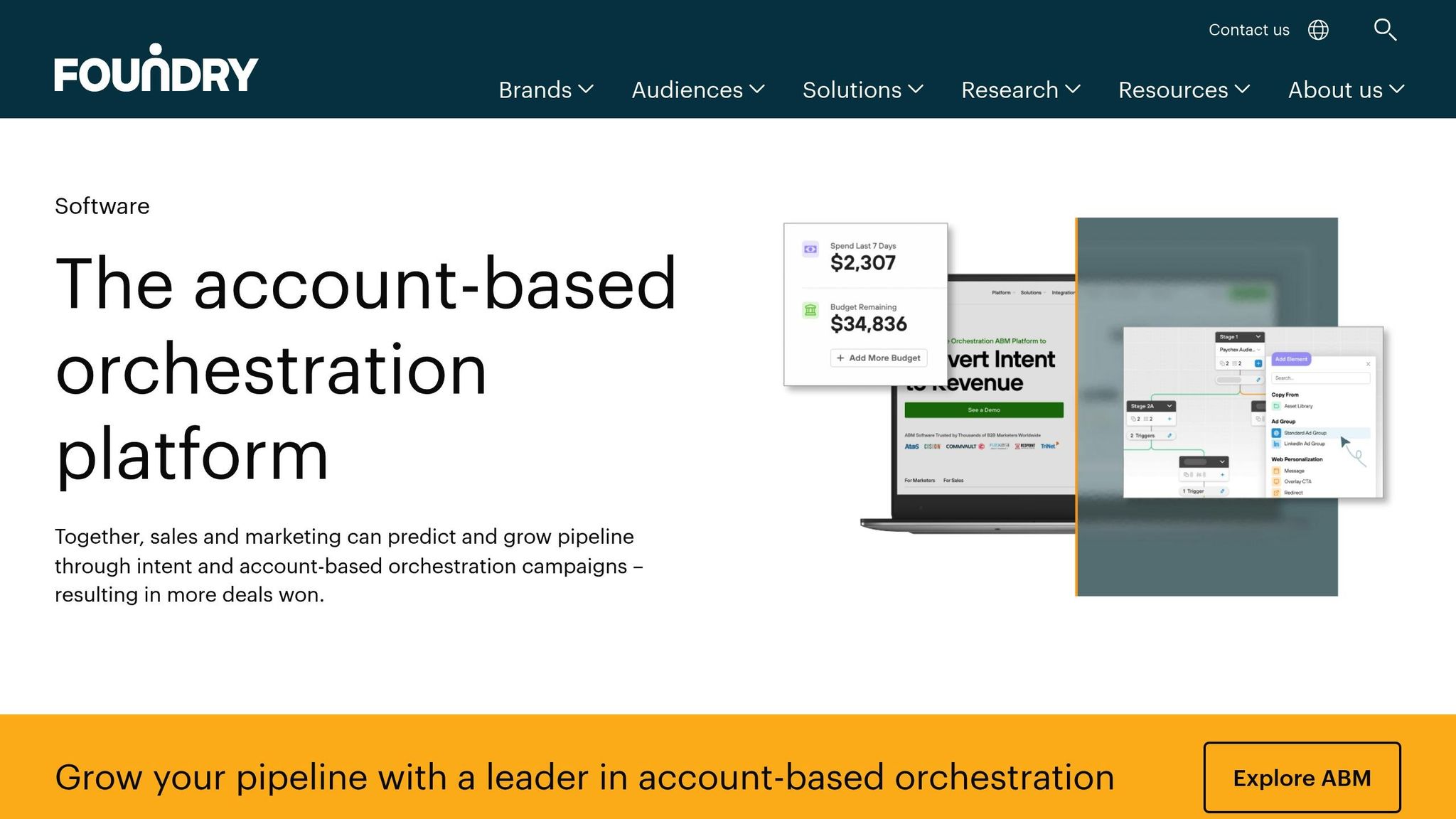
Information about Foundry ABM's features and integration options is quite limited. Details on key aspects like account-level reporting, multi-touch attribution, implementation steps, support quality, and pricing are not readily available. Like many advanced ABM platforms, it’s crucial to carefully evaluate its suitability before making a decision. To get a clearer picture, reach out directly to the vendor for a demo and pricing specifics. This lack of publicly available information highlights the importance of a thorough review process, particularly when comparing it to other tools with more transparent disclosures outlined later.
10. Google Analytics 4
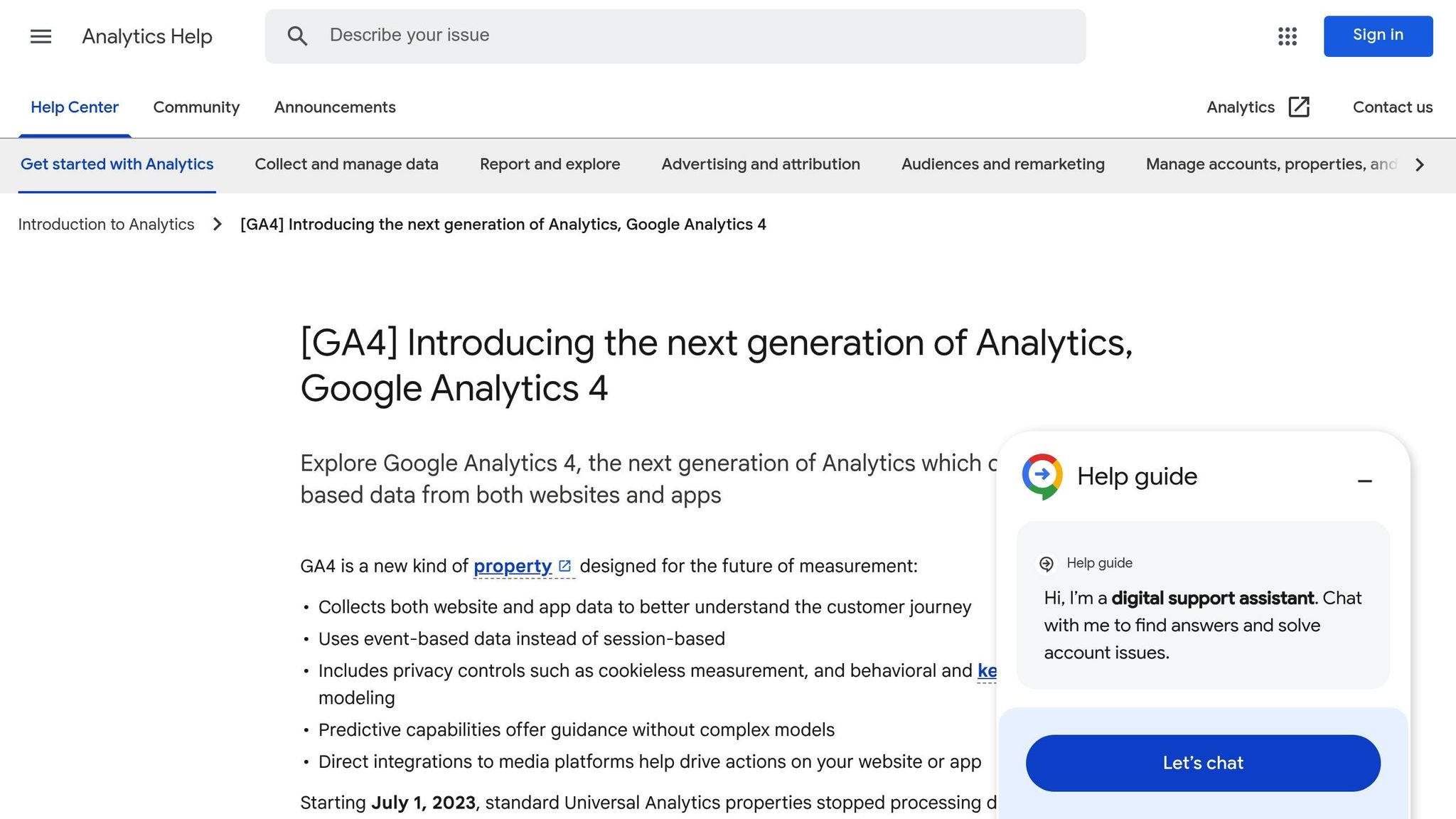
Google Analytics 4 (GA4) isn't specifically designed for account-based marketing (ABM), but its analytics capabilities can complement ABM strategies. As a general-purpose web analytics platform, GA4 provides insights into website behavior and traffic patterns. However, its design lacks the specialized features offered by dedicated ABM tools, which focus on account-level reporting and buying committee analysis.
GA4 supports three attribution models: a data-driven model that uses machine learning to allocate credit based on conversion data, a combined paid/organic last-click model, and a Google Ads last-click model. The data-driven model becomes more accurate over time as it processes more conversion data, making it particularly useful for organizations seeking multi-touch attribution insights.
ABM-Specific Functionality
While GA4 shines at user-level analytics, applying it to ABM requires significant customization. The platform doesn't offer native account-level reporting, so linking individual user data to specific accounts becomes a manual process. This often involves integrating GA4 with a CRM to piece together account-level insights.
Another limitation is its cross-device tracking. Although GA4 can track the same user across multiple devices through user ID implementation (when users are logged in), it may not capture anonymous interactions from potential buying committee members who haven't directly engaged with your brand yet.
Integration Capabilities with Existing Martech Stacks
One of GA4's standout features is its seamless integration with Google's ecosystem. If your organization already uses tools like Google Ads or Google Search Console, data integration is straightforward. Additionally, GA4 connects to CRMs and third-party analytics platforms via API and BigQuery exports. However, its native ABM integrations are limited, requiring third-party connectors to link with dedicated ABM platforms.
This integration is crucial for building account-level insights and custom dashboards tailored to ABM strategies. While GA4 can support these efforts, the process isn't as smooth as with purpose-built ABM tools.
Implementation and Support Quality
Basic GA4 tracking is relatively easy to set up, but advanced ABM attribution requires more effort. Custom event tracking, user ID setup, and CRM integration are essential to align GA4 with ABM buyer journey stages and account-level milestones. Because of this complexity, many organizations rely on analytics consultants or implementation partners to properly configure GA4 for ABM use.
Pricing and Scalability
GA4 uses a freemium pricing model. The free tier offers standard analytics and multi-touch attribution, making it an accessible option for organizations just starting with ABM. For larger-scale needs, GA4 360 costs between $12,500 and $50,000 annually, depending on data volume and complexity. While this pricing is lower than many dedicated ABM platforms, GA4 requires more manual setup and integration work.
The platform scales well with increasing website traffic and data, making it suitable for businesses of all sizes. However, the free tier has limitations on data processing, which could be a challenge for high-traffic websites. As a result, larger organizations often pair GA4 with specialized ABM tools to achieve more comprehensive insights.
Tool Comparison Table
ABM attribution tools come with varying features, integration capabilities, pricing structures, and ideal use cases. Below is a comparison table to help you weigh your options effectively.
| Tool | Core ABM Features | Integration Options | Pricing Model | Best For |
|---|---|---|---|---|
| Karrot AI | Account-level journey mapping, buying committee tracking, AI-powered attribution, white-glove support | CRM systems, ad platforms, and data warehouses using a no-code approach | Custom pricing based on organization size and needs | Teams seeking detailed buying committee insights |
| 6sense | Combines enterprise intent signals with attribution modeling; account-level insights | Major CRM platforms (Salesforce, HubSpot), ad platforms, data warehouses | Enterprise-level custom pricing | Large enterprises with complex tech stacks and intent data requirements |
| Terminus | Full-funnel ABM capabilities, in-depth segmentation, multi-channel campaign tracking | Ad platforms, CRM systems, marketing automation tools | Pricing varies by users and features | Multi-channel campaigns with programmatic ad focus |
| HubSpot | Multiple attribution models (first-touch, last-touch, linear), seamless CRM workflows | Native integrations within HubSpot ecosystem, plus third-party connectors | Tiered pricing within CRM ecosystem | Organizations using HubSpot for a unified platform |
| RollWorks | Multi-touch attribution, scalable ABM program management, programmatic ad tracking | Ad platforms, CRM systems, marketing automation platforms | Varies by use case and users | Teams focused on performance-driven programmatic advertising |
| Demandbase | Account-level insights, campaign orchestration, recognized ABM leader | Major CRM platforms, ad networks, marketing automation systems | Enterprise custom pricing (not disclosed) | Enterprises needing a comprehensive ABM platform |
| Clearbit | Account enrichment, visitor intelligence, firmographic data integration | Salesforce, HubSpot, Marketo, Segment, and other martech platforms | Custom pricing based on data volume and features | B2B companies focused on account identification and enrichment |
| LeanData | Lead-to-account matching, routing automation, engagement tracking | Salesforce, Marketo, Microsoft Dynamics, marketing automation platforms | Custom enterprise pricing | Organizations with complex lead routing needs |
| Foundry ABM | Intent data from B2B research, account engagement scoring, content syndication integration | CRM systems, marketing automation platforms, data warehouses | Custom pricing based on accounts and features | B2B marketers using content syndication and intent signals |
| Google Analytics 4 | Machine-learning-driven attribution, paid/organic last-click models, cross-device tracking | Google Ads, Google Search Console, CRMs via API, BigQuery exports | Freemium (free tier available); GA4 360: $12,500-$50,000 annually | Businesses invested in Google's ecosystem or starting ABM efforts |
This table underscores the varying strengths and functionalities of each tool, helping you align your choice with your specific business needs.
Conclusion
Choosing the right ABM attribution tool is all about finding what fits your organization’s specific needs. The tools we’ve discussed - ranging from enterprise-grade platforms like 6sense and Demandbase to more accessible options like HubSpot and Google Analytics 4 - offer various strengths. Whether you need insights into buying committee engagement, deep intent data, or seamless CRM integration, there’s a solution tailored to your goals.
Here’s something to keep in mind: ABM delivers a 38% higher sales win rate compared to traditional marketing. But to prove ROI and fine-tune your campaigns, accurate attribution is a must. The shift from single-touch to multi-touch attribution has redefined how B2B marketers measure their impact on revenue.
When evaluating tools, focus on factors like technical capabilities, integration with your existing stack, ease of use, scalability, and demonstrated ROI through case studies. Even the most advanced tool won’t deliver results if your team struggles to use it. Striking a balance between technical sophistication and everyday practicality is critical. For example, enterprise organizations with complex tech stacks may find intent data integration invaluable, while teams already using HubSpot or Google Analytics 4 might benefit from quicker adoption thanks to built-in attribution features.
Look for platforms that go beyond tracking individual touchpoints, offering real-time visibility into engagement across entire buying committees. This broader perspective allows you to adopt advanced models that align with your sales cycle. AI-powered attribution models that adapt to your unique sales process can often outperform static, one-size-fits-all systems.
As your business grows, prioritize tools that can handle larger data volumes and evolving ABM strategies without sacrificing support. Implementation is another critical factor - platforms offering hands-on onboarding and strategic guidance often deliver more value over time than those relying solely on self-service.
To make the right choice, assess your current martech stack, set clear attribution goals, and involve both marketing and sales teams in the decision-making process. The right ABM attribution tool will help you identify the touchpoints that truly influence revenue, optimize your marketing budget, and close more deals with your ideal accounts.
FAQs
What should I consider when selecting an ABM attribution tool for my business?
Choosing an ABM attribution tool is all about aligning it with your goals, budget, and the complexity of your marketing approach. Start by identifying the must-have features. For instance, do you need multi-touch attribution to track customer interactions across channels? Or seamless integration with your current CRM and marketing platforms? Don’t forget about robust reporting tools to analyze campaign performance effectively.
Next, think about your team's skill set. Does the tool offer intuitive dashboards that are easy to navigate, or will it require extensive training to use effectively? Scalability is another key factor - make sure the tool can handle your growing data and campaign demands as your business evolves. Lastly, weigh the pricing plans carefully. Look for an option that meets your needs without overstepping your budget, but don’t sacrifice critical features for a lower cost.
What is the difference between single-touch and multi-touch attribution in ABM?
Single-touch attribution gives all the credit for a conversion to just one interaction - typically the first or last touchpoint. While straightforward, this method can miss the bigger picture of a customer's journey.
Multi-touch attribution, however, spreads the credit across several interactions that played a role in the conversion. This method offers a broader perspective on how various touchpoints contribute to outcomes. It's particularly useful in Account-Based Marketing (ABM), where multiple stakeholders and channels often play a role in driving results.
How can AI-driven insights improve the success of ABM strategies?
AI-powered insights can take Account-Based Marketing (ABM) strategies to the next level by offering advanced data analysis, refined targeting, and predictive tools. With AI, businesses can pinpoint high-value accounts, gain a clearer understanding of customer behavior, and craft messaging that speaks directly to their audience's needs and preferences.
On top of that, AI tools excel at optimizing multi-touch attribution. They can break down complex customer journeys to identify which touchpoints have the greatest influence. This helps marketers allocate resources more wisely and fine-tune their strategies to achieve the best possible return on investment (ROI).