Keeping your email bounce rate low is critical for maintaining your sender reputation and ensuring your emails land in inboxes, not spam folders. A bounce rate over 5% can lead to penalties from email service providers, including blocked domains. Here’s what you need to know:
- Bounce Types: Hard bounces (permanent issues like invalid addresses) and soft bounces (temporary issues like full inboxes).
- Industry Standards: A bounce rate under 0.5% is excellent, while above 5% requires immediate action.
- Why It Matters: A high bounce rate can harm deliverability, reduce conversions, and waste marketing budgets.
To manage bounce rates, you need tools that verify email lists, monitor deliverability, and resolve issues. Here’s a quick comparison of the best tools available:
| Tool | Accuracy | Cost (per 1,000 emails) | Free Tier | Catch-All Resolution | Best For |
|---|---|---|---|---|---|
| Prospeo | 98% | $10 | 75/month | Not specified | Sales teams needing verified data |
| ZeroBounce | 98.8% | $8 | 100/month | ~12% | Teams needing integrations |
| NeverBounce | 98.6% | $8 | 10/month | ~8% | Fast processing, refunds |
| MillionVerifier | 95.8% | $3.70 | None | ~5% | Budget-friendly bulk checks |
| Bouncer | 98.9% | $7–$8 | 100/month | ~15% | High accuracy, user satisfaction |
Key Takeaways:
- Small Businesses: ZeroBounce offers a generous free tier for low-volume senders.
- Budget-Friendly: MillionVerifier is the most affordable option with non-expiring credits.
- Enterprise Needs: Bouncer and ZeroBounce provide robust features and compliance for larger teams.
- Fast Processing: NeverBounce is ideal for time-sensitive campaigns.
Choose a tool based on your email volume, budget, and specific needs. Regular email verification ensures your campaigns perform well and keeps your sender reputation intact.
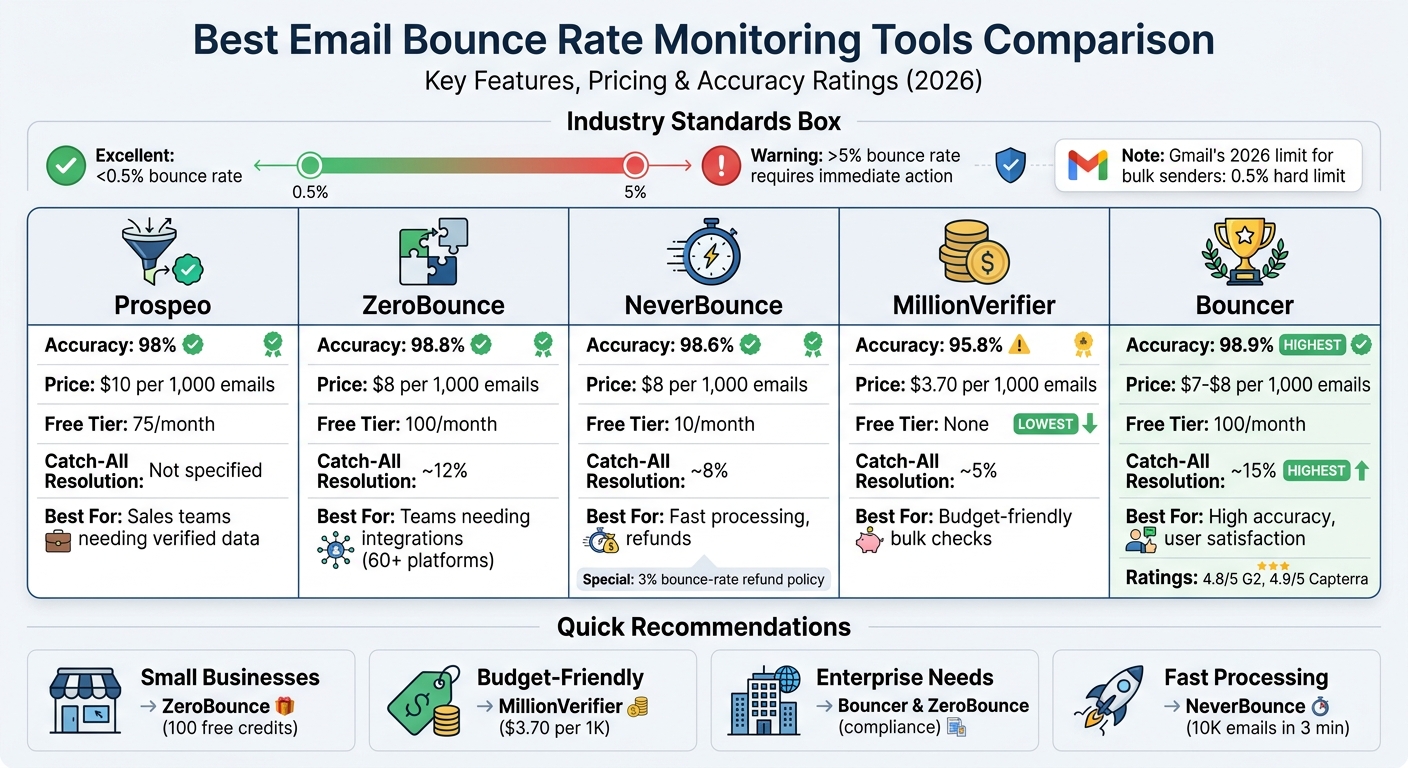
Email Bounce Rate Monitoring Tools Comparison: Features, Pricing & Accuracy
Email Bounce Rates : Strategies for Success
sbb-itb-6e7333f
Best Email Bounce Rate Monitoring Tools
When it comes to maintaining a strong sender reputation, having the right tools to monitor and manage email bounce rates is essential. Here's a rundown of some of the top platforms available, evaluated based on their features, performance, and pricing as of May 2026.
Prospeo
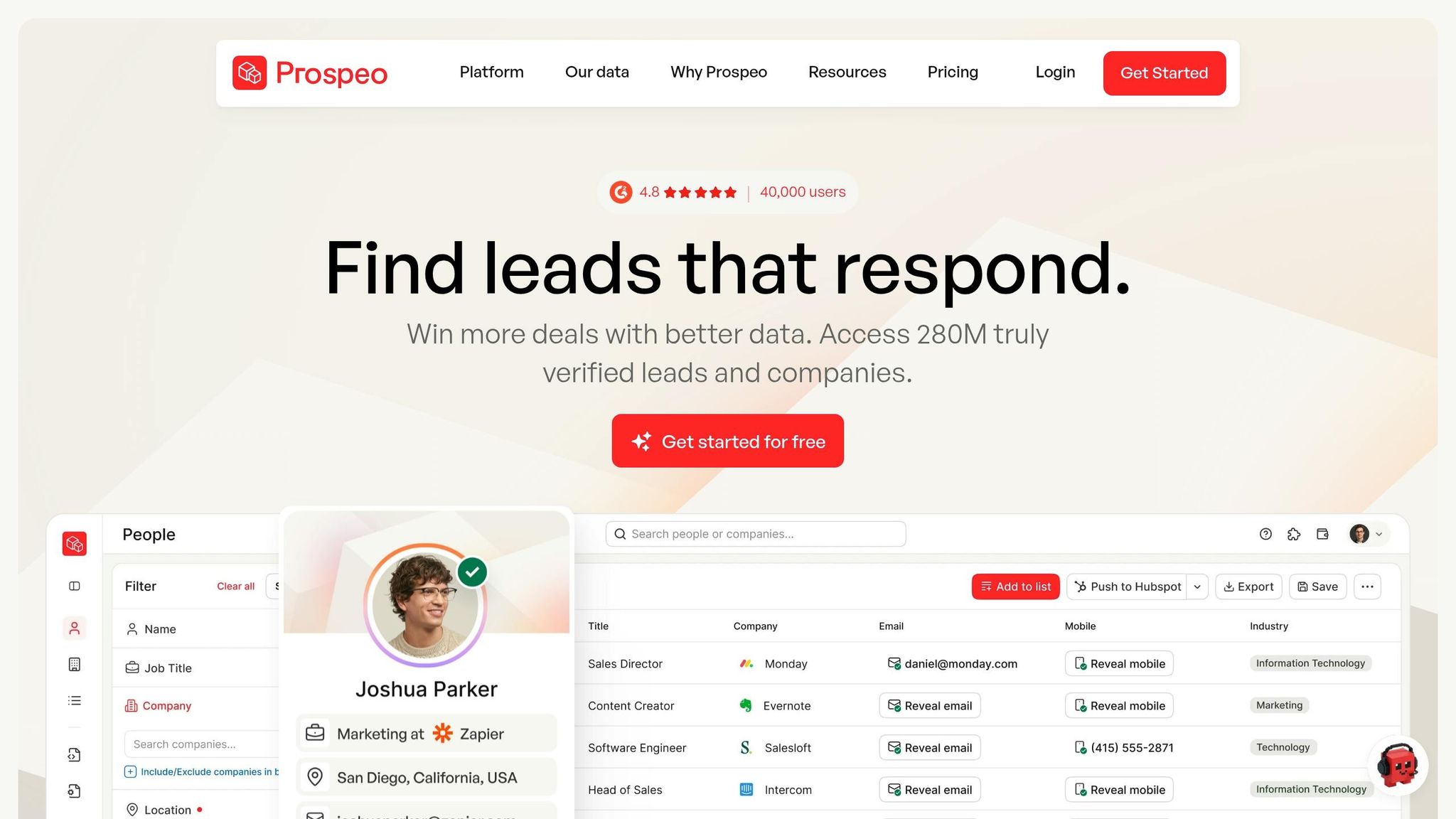
Prospeo takes a unique approach by combining email discovery and verification into a seamless process. Its five-step verification includes syntax checks, MX record validation, SMTP verification, catch-all handling, and spam-trap removal. The platform boasts a database of over 300 million profiles, updated every 7 days - far quicker than the industry standard of 6 weeks.
In 2026, Snyk used Prospeo to cut its bounce rate from 35–40% to under 5%, generating over 200 new opportunities per month. Similarly, Stack Optimize hit $1 million ARR while keeping deliverability above 94% and bounce rates below 3%. Independent testing shows Prospeo delivers 98% accuracy. Pricing starts at $10 per 1,000 emails, with a free tier that allows 75 verified emails monthly, making it a strong choice for lower email bounce rates.
ZeroBounce
ZeroBounce offers a full-featured deliverability suite that extends beyond basic email verification. Key features include inbox placement testing, blacklist monitoring, and AI-driven email scoring. It integrates with over 60 CRMs and email platforms, ensuring smooth workflows. The platform resolves roughly 12% of catch-all domains and achieves 98.8% accuracy in controlled tests.
ZeroBounce is priced at around $8 per 1,000 emails, with a free tier offering 100 verifications per month. Unused credits never expire, making it a great option for teams with irregular verification needs.
NeverBounce
NeverBounce is renowned for its speed, processing 10,000 emails in just 3 minutes, making it a go-to for time-sensitive campaigns. It also offers a bounce-rate refund policy: if emails marked as deliverable bounce above 3%, users receive credit refunds.
The platform achieves 94% accuracy in detecting catch-all domains (resolving about 8% in practice) and 98.6% overall accuracy in independent tests. With over 80 integrations, including native connections and Zapier, NeverBounce fits seamlessly into complex workflows. Pricing is $8 per 1,000 emails, and the free tier includes 10 credits. It holds ratings of 4.5/5 on Capterra and 4.2/5 on G2.
MillionVerifier
For businesses prioritizing affordability, MillionVerifier stands out with its low cost of approximately $3.70 per 1,000 emails. Its credits never expire, making it ideal for companies that clean email lists infrequently or in bulk. Independent tests report 95.8% accuracy, with the platform resolving about 5% of catch-all domains. MillionVerifier is rated 4.6/5 on both G2 and Capterra.
Bouncer
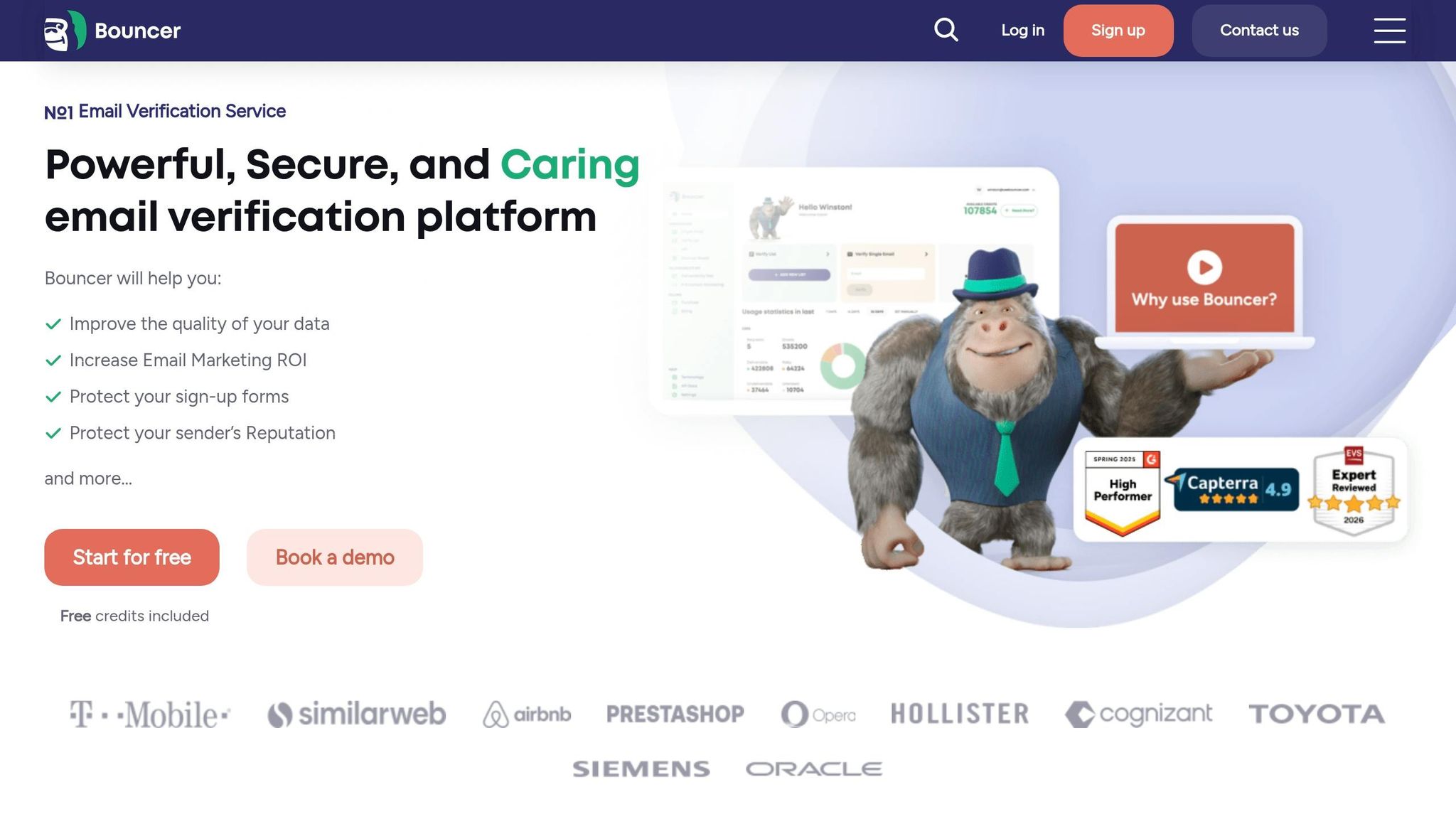
Bouncer excels in user satisfaction, earning ratings of 4.8/5 on G2 and 4.9/5 on Capterra. It achieved the highest accuracy among reviewed tools at 98.9% in controlled testing. Unique features include "Toxicity Analysis" to identify harmful addresses and a "Deliverability Kit" for mail server checks. Bouncer resolves about 15% of catch-all domains, leading its category.
Pricing ranges from $7 to $8 per 1,000 emails, and the free tier offers 100 credits. Its flexibility makes it a great option for agencies and mid-sized businesses.
Tool Comparison Table
Monitoring email bounce rates is essential for effective email campaigns. Below is a summary of key features from top email verification tools:
| Tool | Accuracy Rate | Price per 1,000 Emails | Free Tier | Catch-All Resolution | Best For |
|---|---|---|---|---|---|
| Prospeo | 98% | $10 | 75/month | Not specified | Pre-verified data with a 7-day refresh cycle, ideal for prospecting |
| ZeroBounce | 98.8% | $8 | 100/month | ~12% | Comprehensive deliverability suite with over 60 integrations |
| NeverBounce | 98.6% | $8 | 10/month | ~8% | Reliable processing with a 3% bounce-rate refund policy |
| MillionVerifier | 95.8% | $3.70 | None | ~5% | Affordable bulk verification with non-expiring credits |
| Bouncer | 98.9% | $7–$8 | 100/month | ~15% | Advanced toxicity analysis and high user satisfaction ratings |
Key Highlights
- Prospeo: Designed for sales teams, it delivers fresh, pre-verified contact data every 7 days, making it perfect for outbound prospecting.
- ZeroBounce: Offers a full deliverability suite, compatibility with over 60 integrations, and compliance with certifications like GDPR, SOC 2, and PCI.
- NeverBounce: Provides reliable processing and a 3% bounce-rate refund policy, giving peace of mind to users.
- MillionVerifier: Ideal for budget-conscious users, it features cost-effective pricing and credits that never expire.
- Bouncer: Stands out with its advanced catch-all domain resolution (~15%) and high satisfaction ratings (4.8/5 on G2, 4.9/5 on Capterra).
Recommendations Based on Needs
- Small Businesses: If you're sending fewer than 25,000 emails monthly, ZeroBounce's free tier of 100 credits is a great low-risk option.
- Tight Budgets: MillionVerifier's low pricing and non-expiring credits make it a strong choice.
- Mid-Market Senders: NeverBounce offers dependable processing and useful integrations for medium-scale operations.
- Enterprise Teams: For those requiring strict compliance certifications, ZeroBounce and Bouncer are excellent picks.
- Sales Teams: Prospeo shines for teams needing seamless lead generation integration.
This comparison provides a clear starting point for finding the right email verification tool to fit your needs.
More Tools to Consider
In addition to the main verification platforms, there are other tools that cater to specific needs, offering tailored solutions for managing email bounce rates and improving deliverability. Two notable options are QuickEmailVerification and GlockApps, each bringing a distinct focus to the table.
QuickEmailVerification
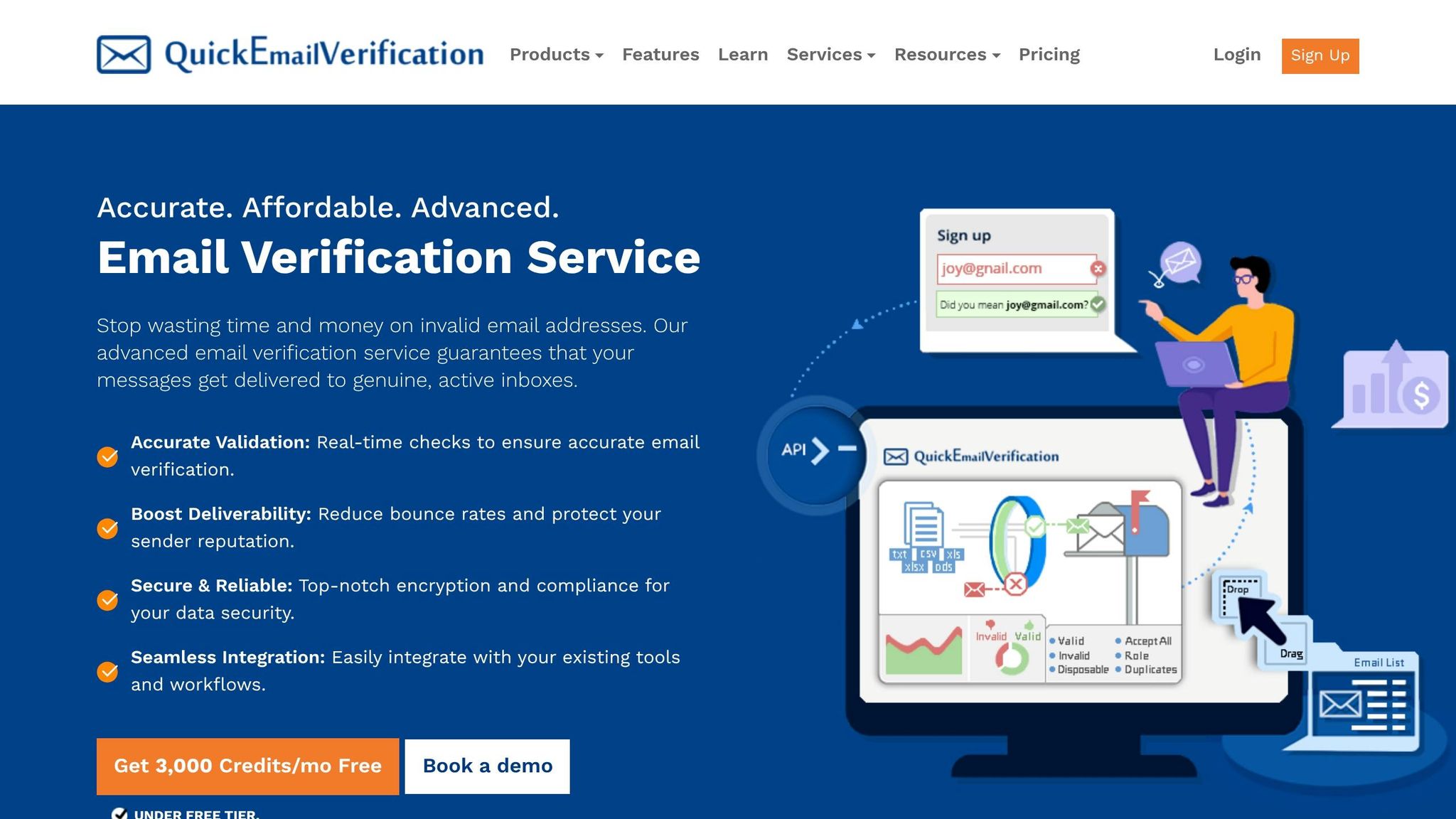
QuickEmailVerification is particularly appealing for its generous free tier, which includes 3,000 free monthly credits. This makes it a great choice for businesses looking to maintain their email lists without stretching their budgets.
The platform uses a multi-step verification process to classify email addresses as valid, risky, or invalid before campaigns are launched. This proactive approach helps reduce hard bounces and ensures cleaner email lists. For paid services, the cost is $8 per 1,000 emails, making it an affordable way to test and refine your email verification process. While QuickEmailVerification is designed for bulk list cleaning, GlockApps takes a deeper dive into the technical reasons behind email bounces.
GlockApps
GlockApps specializes in analyzing the technical factors that contribute to email bounces. It looks beyond basic checks, examining elements like DNS settings, content triggers, and authentication protocols such as SPF, DKIM, and DMARC to identify and resolve issues.
"GlockApps provides in-depth diagnostics to help pinpoint the exact cause and provides specific actions to resolve it. It goes beyond surface-level checks and really dives into technical details like DNS settings, content triggers, and blacklist monitoring." - Praduman Singh, Senior Sales Development Representative, Zimetrics
The platform offers robust monitoring features, including tracking sender domains against over 50 industry blocklists and delivering 10,000 free DMARC alerts each month. Its integration with top email marketing platforms and Google Postmaster Tools is a standout feature, as it allows for extended historical spam rate data storage compared to Google's native interface, giving users better insight into trends. During its 14-day trial, GlockApps provides 2 free deliverability tests and 20 uptime monitors, offering a comprehensive introduction to its capabilities.
How to Select the Right Tool
Choosing the right tool involves aligning its features and capabilities with your specific business requirements. Let's break down the key factors to consider.
Selection Criteria
Accuracy is non-negotiable. Look for tools that achieve at least 95% accuracy, with a target of 99% by 2026. Deliverability is another crucial metric - tools should help you maintain a bounce rate below 2%, as anything above 5% may indicate issues with your email list.
Pricing models should match your email volume. For businesses with infrequent email campaigns, pay-as-you-go pricing is a smart choice. On the other hand, subscription plans are better suited for companies running frequent, high-volume campaigns.
Processing speed can have a big impact, especially when preparing for major campaigns. For example, Emailable can handle up to 2 million email verifications per hour, while ZeroBounce processes around 133,000 emails per hour. Such differences can significantly affect your workflow when managing large databases.
Integration capabilities are also essential. Tools that offer native CRM and email platform integrations can save you time by eliminating the need for manual CSV imports. Additionally, strong APIs and SDKs allow developers to embed real-time validation into signup forms, ensuring invalid emails are filtered out before entering your system.
Pay attention to credit policies and hidden fees. Some providers, like Alfred and Kickbox, don’t charge for "unknown" results or duplicate entries, which can improve your return on investment. Many platforms also offer free credits - ranging from 10 to 250 - so you can test their accuracy on a sample list before committing.
Finally, use curated directories to compare tools more efficiently.
Using Directories to Compare Options
To save time, consider using resources like the Email Service Business Directory (https://emailservicebusiness.com). This directory consolidates information such as pricing, features, and integrations into one place. Instead of researching individual tools, you can compare their offerings side-by-side. This approach simplifies decision-making, helping you quickly identify the tool that aligns with your business size, email volume, and deliverability goals.
Conclusion
Keeping an eye on email bounce rates is crucial for safeguarding your sender reputation and ensuring your emails land where they’re supposed to. As mentioned earlier, staying below a 2% bounce rate is essential, while anything over 5% could lead to serious consequences, like your domain being blacklisted. With Gmail tightening its standards to a hard limit of 0.5% for bulk senders by 2025–2026, the pressure to maintain clean email lists has never been greater.
The tools discussed earlier provide the features necessary to meet these standards, including multi-layered verification, real-time API validation, and automated list management. Whether you’re looking for cost-effective bulk pricing, fast processing, or the robust integrations offered by ZeroBounce, there’s an option tailored to your needs.
It’s important to note that email data degrades at a rate of about 2% per month. This means email verification isn’t a one-and-done process. Automating reverification cycles and adding real-time checks at signup forms can help keep your lists clean and up-to-date, reducing the need for frequent manual checks.
When choosing a tool, consider your specific requirements, such as accuracy levels, processing speed, integration capabilities, and budget. Many providers offer free credits (usually between 50–250) to test their accuracy with your own data before committing to a subscription. For an easier comparison, the Email Service Business Directory (https://emailservicebusiness.com) is a handy resource for evaluating pricing, features, and integrations all in one place.
Investing in email verification tools ensures better deliverability, provides more accurate campaign metrics, and improves email marketing ROI by reducing unnecessary costs. By protecting your sender reputation, these tools ensure your messages reach the inbox - where they belong. Finding the right tool for your needs is the first step toward maintaining long-term email success.
FAQs
How often should I re-verify my email list?
Keeping your email list up-to-date is crucial, especially before launching a campaign. Regular verification helps ensure your messages reach valid inboxes, which can significantly improve deliverability rates and reduce bounces. By doing this, you not only protect your sender reputation but also boost the effectiveness of your campaigns.
What’s the fastest way to stop bounces from signup forms?
To cut down on bounces from signup forms, start by using email validation tools to confirm email addresses before they’re submitted or used. Adding anti-spam features like CAPTCHA or simple test questions can help filter out bots and fake sign-ups. Also, consider using a double opt-in process, where users must confirm their subscription via email. This ensures that only real, interested users are added, reducing invalid addresses and keeping bounce rates low.
Which bounce-rate tool is best for catch-all domains?
BounceExpert works well for catch-all domains, thanks to its three-level validation system. It features SMTP verification with support for multiple servers and real-time bounce detection, providing precise results and dependable performance.