Email automation can boost your marketing efforts, but without proper compliance, it can lead to costly mistakes. Non-compliance with laws like GDPR (EU), CAN-SPAM (US), and CASL (Canada) can result in fines as high as €20 million or $53,088 per email. These regulations require transparency, consent, and clear opt-out options to protect recipients and their data.
Here’s what you need to know:
- GDPR: Requires explicit opt-in consent and data protection for EU residents. Violations can lead to fines of up to 4% of global revenue.
- CAN-SPAM: Operates on an opt-out model, mandating clear unsubscribe options and accurate sender information.
- CASL: Imposes strict rules on consent and unsubscribe mechanisms, with penalties up to CAD $10 million.
To stay compliant:
- Use double opt-in to verify consent.
- Include one-click unsubscribe links in every email.
- Regularly audit your workflows and maintain clean email lists.
- Configure tools to handle consent tracking, authentication (SPF, DKIM, DMARC), and geographic segmentation.
Automation simplifies compliance but requires vigilance. Platforms like Mailchimp, Klaviyo, and Smartlead offer features like consent tracking and suppression list management to ensure your campaigns meet legal standards. By integrating compliance into your email strategy, you can avoid penalties, protect your sender reputation, and build trust with your audience.
Mastering Email Compliance: Navigating CAN-SPAM & GDPR for Cold Email Marketing
Key Compliance Laws for Email Marketing
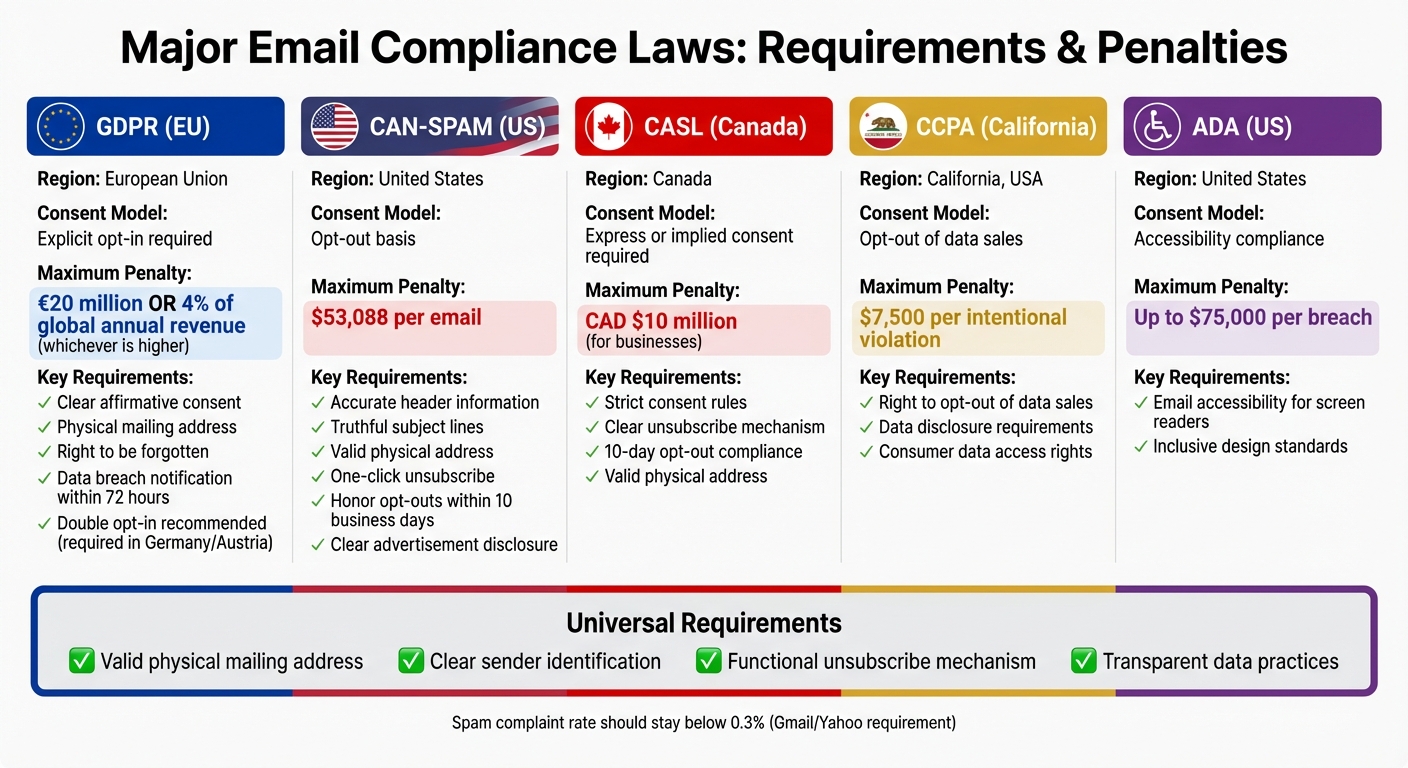
Email Compliance Laws Comparison: GDPR, CAN-SPAM, CASL, CCPA, and ADA
When it comes to email automation, two major laws set the rules: GDPR (European Union) and CAN-SPAM (United States). Both require clear sender identification and a physical mailing address, but they differ in how they handle consent. GDPR demands explicit opt-in consent, while CAN-SPAM allows emails to be sent unless the recipient opts out.
The stakes for non-compliance are high. Under CAN-SPAM, violations can lead to fines of up to $53,088 per email, while GDPR penalties can soar to €20 million or 4% of annual global revenue, whichever is higher. Let’s break down the specific requirements of each law.
GDPR: Consent and Data Protection Requirements
GDPR applies to any organization that processes personal data of individuals in the European Union or European Economic Area. This regulation is all about consent - it requires clear and explicit permission before sending marketing emails. According to the law:
"Consent should be given by a clear affirmative act - silence, pre-ticked boxes, or inactivity will typically not constitute consent".
The law broadly defines personal data to include information like IP addresses and device IDs. Organizations are required to collect only the data they need, keep it only as long as necessary, and honor subscribers' rights to access, correct, transfer, or delete their data (commonly referred to as the "right to be forgotten").
Although GDPR doesn’t mandate double opt-in, it’s considered a best practice and is effectively required in some countries like Germany and Austria. Additionally, if a data breach occurs that risks individual privacy, organizations must notify supervisory authorities within 72 hours.
CAN-SPAM: Unsubscribe Rules and Sender Requirements
CAN-SPAM governs all commercial email communication, including business-to-business messages. Unlike GDPR, CAN-SPAM operates on an opt-out basis, meaning you can send emails without prior consent, but recipients must be given a clear and simple way to unsubscribe.
To comply with CAN-SPAM, every email must include:
- Accurate header information (From, To, and Reply-To fields)
- A truthful subject line that reflects the email’s content
- A clear disclosure that the email is an advertisement
- A valid physical mailing address
The unsubscribe process must be straightforward - no fees, no extra steps beyond providing an email address, and no more than a single webpage visit. Once a recipient opts out, their request must be honored within 10 business days, and the opt-out mechanism must remain functional for at least 30 days after the email is sent. Additionally, opted-out addresses cannot be sold or transferred, except to ensure compliance.
How to Build Compliant Email Automation Workflows
Creating compliant email automation workflows means implementing systems that respect subscriber preferences while adhering to legal requirements. This involves automating consent and opt-out processes, tailoring workflows to regional laws, and keeping detailed records of every interaction. By doing so, you can protect your business and maintain trust with your audience.
Setting Up Consent and Opt-Out Automation
A key step in compliant email automation is using double opt-in. When someone subscribes, send an automated confirmation email requiring them to click a link to validate their address. This step not only ensures the email is valid but also provides a clear record of consent, which is essential for complying with laws like GDPR and CAN-SPAM.
Track and log consent details, such as the timestamp, IP address, and the source of the signup (e.g., a specific landing page or form). Store this data within each contact's record for easy access during audits.
For opt-outs, include a one-click unsubscribe link in the footer of every email. This link should immediately update the subscriber's status in your database without requiring additional steps like logging in. Ensure opt-out requests are processed quickly to avoid compliance issues.
Synchronize suppression lists across all platforms - including your CRM, automation tools, and sales systems - to prevent accidental re-contacting of unsubscribed users.
Louis Driving Hawk, Email Expert at Twilio SendGrid, emphasizes: "Don't set it and forget it. I've seen customers set up really long, complex automations... and then the campaign isn't monitored. Then, when people have stopped engaging... ISPs might start sending those messages to spam".
Use geographic segmentation to apply the correct legal standards automatically. For instance, GDPR requires explicit opt-in consent for EU residents, while CAN-SPAM allows for an opt-out model in the U.S. Tag subscribers by region and route them through workflows that align with the applicable regulations.
Once these measures are in place, the next step is configuring your email tools to enforce compliance.
Configuring Email Tools for Compliance
After setting up consent workflows, ensure your email tools support compliance by verifying sender identity and securing subscriber data. Start by enabling email authentication protocols like SPF, DKIM, and DMARC. These protocols confirm your sender identity and improve deliverability.
Differentiate between commercial and transactional emails within your platform. Commercial emails - such as promotions and newsletters - must include unsubscribe links and honor opt-out requests. Transactional emails, like order confirmations or password resets, are exempt as long as they don’t include promotional content. Use your automation platform to classify and handle these email types appropriately.
Provide a preference center where subscribers can adjust their email frequency or choose specific content types instead of unsubscribing completely. This approach respects their preferences and helps you maintain compliance. Keep an eye on spam complaints, aiming for a rate below 0.3%, using tools like Google Postmaster Tools.
Secure subscriber data by encrypting it, requiring two-factor authentication for access, and automating list hygiene. Remove invalid, bounced, or inactive addresses every 3–6 months to maintain a strong sender reputation.
Finally, perform quarterly audits of your consent records and opt-out systems to identify and fix any issues before they escalate into compliance violations.
Designing Compliant Email Templates and Sequences
After setting up proper consent mechanisms and configuring your tools, the next step is to focus on creating email templates and sequences that align with legal requirements while achieving your marketing goals. Whether you're sending a promotional newsletter or an automated drip campaign, every email must include specific compliance elements. Failure to meet these standards can result in hefty penalties under regulations like CAN-SPAM and GDPR.
Key Components for Every Email Template
To ensure compliance, every email template you create should include these essential elements:
- Sender Information: The "From", "To", and "Reply-To" fields must clearly identify the sender with a recognizable name and an actively monitored reply address.
- Honest Subject Lines: The subject line must accurately represent the email's content. For example, if the subject mentions a discount, the body of the email must include details about that discount. Misleading subject lines directly violate CAN-SPAM rules.
- Physical Address: Include a valid physical postal address in the footer. This can be a street address, a registered P.O. box, or a private mailbox. This requirement is mandated by CAN-SPAM, GDPR, and CASL.
- Unsubscribe Option and Privacy Policy: Provide a one-click unsubscribe link that is easy to locate and use. Additionally, link to your privacy policy in the footer to ensure transparency.
Adelina Peltea, CMO at Usercentrics, advises: "Ensure unsubscribing or changing preferences is easily accessible and user-friendly to complete".
Including these elements ensures your emails meet compliance requirements consistently across all campaigns.
Compliance for Different Automated Campaigns
Compliance standards can vary depending on the type of automated email workflow you're using. Here's how to approach some common scenarios:
- Transactional Emails: These include order confirmations, password resets, or account notifications. They are generally exempt from CAN-SPAM's unsubscribe and advertising disclosure requirements, provided they don't contain false routing information. If you mix transactional and promotional content, ensure transactional details appear prominently at the top to maintain the email's exempt status.
- Abandoned Cart and Retention Campaigns: For campaigns like abandoned cart recovery or customer retention, make sure the subject line reflects the email's content accurately. For instance, if you're offering a discount to encourage cart recovery, the discount must be clearly stated in the email body.
To avoid overwhelming subscribers, map out your automated workflows carefully. Overlapping sequences can lead to "email overload", increasing spam complaints and harming your sender reputation. Additionally, implement sunsetting policies to manage inactive subscribers. Automatically remove or re-verify users who haven’t engaged with your emails for 3 to 6 months. This approach helps maintain both compliance and email deliverability.
sbb-itb-6e7333f
Monitoring and Auditing Email Campaigns for Compliance
Creating compliant email templates is just the first step. To avoid fines or harm to your sender reputation, ongoing monitoring and auditing are crucial. Laws like GDPR and CAN-SPAM frequently evolve, and even one non-compliant email can lead to hefty penalties - up to $51,744 per email under CAN-SPAM and as much as €20 million (or 4% of global turnover) under GDPR. As Dave Willis from Exclaimer wisely puts it, "Prevention is cheaper than remediation".
Random checks won't cut it when it comes to spotting compliance issues. Automated real-time scanning tools are far more reliable, ensuring every email draft is checked for broken links, missing unsubscribe options, and compliance with SPF, DKIM, and DMARC protocols. These tools also provide continuous monitoring of SPF, DKIM, and DMARC to protect against spoofing attempts.
Your responsibility doesn’t end with your own campaigns. Third-party partners or affiliates sending emails on your behalf must also follow legal guidelines and your brand standards. Monitoring these external senders is critical. To ensure you’re prepared for audits or legal inquiries, maintain detailed records such as immutable logs, screenshots, and transcripts. And don’t forget - keeping your email lists clean is another essential part of compliance.
Maintaining Clean Email Lists
Clean email lists are a cornerstone of compliance and maintaining a good sender reputation. Automate list hygiene processes to handle opt-out requests promptly and remove invalid addresses. Holding onto inactive or outdated lists increases the risk of hitting spam traps and generating complaints.
Set up sunsetting policies to automatically remove subscribers who have been inactive for three months. Major email providers like Gmail and Yahoo require bulk senders to keep spam complaint rates below 0.3%, as monitored in their Postmaster Tools.
Tools for Compliance Monitoring
Once your email list is in good shape, real-time monitoring tools become essential for catching compliance violations as they happen. The best tools provide real-time alerts and detailed reports. They continuously track engagement metrics and flag any bounce, unsubscribe, or abuse rates that exceed industry standards. For example, regularly checking Google Postmaster Tools can help ensure your spam complaint rates stay below the 0.3% threshold.
Look for platforms with AI-driven compliance features, such as Natural Language Processing, which can evaluate emails for compliance issues and detect sensitive data leaks. These systems can quickly identify serious violations and even provide pre-written notices to address non-compliant behavior among staff or partners. Centralized signature management platforms can also ensure legal disclaimers and company details are consistently included in employee emails. Additionally, some regulations, like the Sarbanes-Oxley Act, require organizations to retain email archives for at least seven years, so your compliance tools should support long-term storage and retrieval.
Here’s a quick comparison of key monitoring requirements across major regulations:
| Regulation | Maximum Penalty | Key Monitoring Requirement |
|---|---|---|
| GDPR (EU) | €20M or 4% of global turnover | Explicit opt-in consent; right to be forgotten |
| CAN-SPAM (US) | $51,744 per email | Valid physical address; clear opt-out mechanism |
| CASL (Canada) | CAD $10M (for businesses) | Express or implied consent; 10-day opt-out compliance |
| CCPA (California) | $7,500 per intentional violation | Right to opt-out of data sales; data disclosure |
| ADA (US) | Up to $75,000 per breach | Email accessibility for screen readers |
Finding Compliance Tools with Email Service Business Directory
When it comes to building compliant email automation strategies, selecting the right platform is a key step. Businesses often struggle to find a balance between powerful automation features and meeting strict regulatory standards. That’s where the Email Service Business Directory comes in - it streamlines the search by offering a curated list of email marketing platforms that excel in both automation and compliance. Instead of spending hours researching individual tools, you can quickly compare top solutions in one place and pinpoint the platforms that meet your specific compliance needs.
The directory allows you to filter platforms based on your campaign goals - whether you’re focused on e-commerce promotions, lead nurturing, or transactional emails. Each platform listing includes details on compliance features, pricing, and integration options, making it easier to align your choice with your business requirements.
Platforms with Compliance and Automation Features
The platforms featured in the directory combine advanced compliance tools with automation capabilities. For example, Mailchimp offers GDPR-compliant sign-up forms and activity logs to help prevent noncompliance. Similarly, Klaviyo supports automatic unsubscribes, double opt-in processes, and consent data storage, which are essential for maintaining audit trails. If you’re managing affiliate marketing efforts, PerformLine monitors email, social media, and even calls, ensuring that your marketing partners stick to your compliance standards.
For more advanced compliance tasks, Salesforge uses AI to handle consent tracking and geographic segmentation, applying the correct privacy regulations based on the recipient’s location. On the other hand, Smartlead simplifies monitoring by offering a "Master Inbox" that centralizes replies, unsubscribes, and engagement data, making it easier to track consent requests and flag potential legal issues.
Mark Voronov, Co-Founder and CEO of SocialPlug, emphasizes, "Whether it's through a double opt-in process or clean consent forms, make sure subscribers actively agree to hear from you".
When evaluating platforms, it’s essential to consider not just compliance features but also email volume limits and pricing. For instance, Brevo offers a free plan starting at $8.08/month with unlimited contacts, making it a budget-friendly option for small businesses just starting with compliance automation. ActiveCampaign, starting at $15/month, includes advanced drip automation and an integrated CRM, catering to businesses looking for more robust functionality. For higher volume senders, Smartlead is available at $39/month and is tailored for cold outreach campaigns with tools like automated warmups and compliance tracking.
The Email Service Business Directory breaks down pricing tiers and feature sets, helping you make informed decisions without overlooking critical compliance tools. By understanding the features each platform offers, you’ll be better equipped to implement automated workflows that keep your campaigns secure and compliant.
Conclusion
Incorporating compliance policies into your email automation workflows is a smart move for building a long-term, profitable email marketing strategy. By adhering to regulations like GDPR and CAN-SPAM, you not only avoid hefty fines but also ensure your emails pass authentication checks and steer clear of spam filters. With Gmail and Yahoo requiring bulk senders to authenticate emails and maintain spam rates below 0.3% starting February 2024, meeting these standards is no longer optional - it’s essential.
But it’s not just about staying on the right side of the law. Automation enhances efficiency. Features like automated consent tracking, double opt-in processes, and instant unsubscribe options minimize errors and free up your team to focus on bigger-picture strategies. Plus, permission-based marketing delivers impressive returns, with ROI ranging from $36 to $42 for every dollar spent.
As Jacob Hanson from Twilio SendGrid explains:
"Marketing automation is more than just automating portions of your marketing process because it provides valuable data points that allow marketers to determine who to target within their list of leads with varying outreach methods".
This kind of data-driven approach thrives when paired with proper consent and transparent data practices.
To simplify compliance, check out the Email Service Business Directory. It’s a one-stop resource for comparing tools that handle consent management, authentication protocols, and geographic segmentation. Whether you’re managing a modest list of 1,000 contacts or sending millions of emails each month, the right platform can make compliance seamless.
To put this guide into action, start by reviewing your workflows against the compliance standards detailed here. Then, use the directory to find a platform that fits your needs and budget. Investing in compliant automation not only boosts deliverability and strengthens customer relationships but also shields your business from costly penalties.
FAQs
What’s the difference between GDPR and CAN-SPAM when it comes to email marketing compliance?
The GDPR (General Data Protection Regulation) prioritizes the protection of personal data by requiring businesses to obtain explicit opt-in consent before sending marketing emails. It also empowers individuals with rights like accessing, updating, or deleting their personal data. Non-compliance with GDPR can lead to hefty fines - up to €20 million or 4% of a company’s global annual revenue, whichever is higher.
On the other hand, the CAN-SPAM Act permits businesses to send emails without prior consent but enforces strict rules to ensure transparency. These rules include using accurate header information, offering a clear, simple way to unsubscribe, and avoiding misleading subject lines. Failing to meet these standards can result in penalties of up to $50,000 per violation.
Navigating these regulations is essential for crafting email campaigns that are both compliant and effective, especially when targeting audiences in regions with varying legal requirements.
How can businesses ensure they track and manage consent properly for email compliance?
To ensure email compliance, it's crucial for businesses to carefully document every consent event. This includes details like the subscriber’s email address, the date consent was given, the channel used, and the exact wording of the consent request. Use straightforward, easy-to-understand language to clearly explain what users are agreeing to, and make sure consent requests are kept separate from other terms or policies. Always include a simple, accessible opt-out option so users can revoke their consent whenever they choose.
A consent management system can make this process much simpler by automatically timestamping and tracking any changes. Plus, many tools listed in the Email Service Business Directory can help you handle compliance tasks more efficiently, allowing you to better manage and improve your email campaigns.
How can I ensure compliance with email marketing regulations using automation tools?
Many email marketing platforms come equipped with features designed to help you follow regulations like GDPR and CAN-SPAM. For instance, tools like Mailchimp, Klaviyo, and Twilio SendGrid can simplify tasks such as managing user consent, processing unsubscribe requests, and safeguarding data privacy. On top of that, services like Kickbox can verify email addresses, ensuring your lists remain accurate and compliant.
Incorporating these tools into your email workflow not only simplifies compliance but also allows you to focus on crafting impactful campaigns. Be sure to explore your platform's compliance options and tailor them to fit your specific needs.