Consent tracking tools are essential for businesses navigating data privacy laws like GDPR, CCPA, and CPRA. These tools ensure compliance by managing user consent, maintaining detailed records, and integrating with marketing systems. Non-compliance risks hefty fines - up to €20 million or 4% of global revenue.
Key metrics to monitor include:
- Consent Rates: Percentage of users agreeing to data collection.
- Opt-in/Decline Rates: Breakdown of user choices for tracking.
- Non-Interaction Rates: Users who neither accept nor decline consent.
- Withdrawal Rates: Frequency of users revoking consent.
- Audit Trail Completeness: Detailed records of consent actions.
- Purpose-Specific Consent: Tracking consent for specific data uses like email marketing or analytics.
Top tools like Usercentrics, TrustArc, OneTrust, and Piwik Pro offer features like real-time consent tracking, compliance reporting, and seamless integration with marketing platforms. Choosing the right tool depends on your business size, jurisdictional requirements, and integration needs.
What Are The Best Data Collection Methods For GDPR Compliance? - Modern Marketing Moves

Key Metrics for Consent Tracking
Managing consent effectively means keeping an eye on key metrics that highlight both compliance and user engagement. Below, we’ll break down these metrics and their importance for maintaining trust, meeting regulations, and optimizing marketing efforts.
Consent rates show the percentage of users who actively agree to data collection and tracking. This is one of the most important indicators of compliance, as it reveals how much of your audience has granted permission to process their personal data. High consent rates often reflect trust in your brand, while declining rates might point to issues with your messaging or growing privacy concerns among users.
Opt-in and decline rates provide a closer look at user behavior. While consent rates give an overall picture, opt-in and decline rates dive deeper. Opt-in rates measure users who agree to tracking, while decline rates track those who refuse. For example, if you notice a high consent rate but low opt-in numbers, it could mean users acknowledge the banner but choose not to participate - potentially limiting your marketing reach. On the other hand, strong opt-in rates suggest users see value in sharing their data, which can improve personalization and campaign success. High decline rates, however, might indicate that your consent banners are unclear, intrusive, or fail to communicate value effectively.
Non-interaction rates track users who see your consent banner but neither accept nor decline. High non-interaction rates can signal problems with the design, placement, or wording of your banner. Importantly, non-interaction doesn’t count as valid consent under laws like GDPR or CCPA, meaning you can’t legally process these users’ data for marketing. Monitoring this metric can help you tweak your consent experience to encourage active responses.
Consent withdrawal rates measure how often users revoke their consent over time. This is calculated by dividing the number of withdrawals by the total number of users who previously consented, expressed as a percentage over a given period. When users withdraw consent, you must immediately stop processing their data and update systems like CRMs or suppression lists. A gradual rise in withdrawals might reflect shifts in user preferences, while sudden spikes could indicate a privacy issue or flaws in your consent process.
Audit trail completeness ensures your consent management platform keeps detailed, timestamped records of every interaction. A complete audit trail should include the exact consent text shown to users, their response, the time it occurred, and identifying information like an IP address. Without thorough documentation, your organization faces compliance risks and may struggle to resolve disputes if users claim they didn’t grant consent. This level of detail is essential for audits and legal protection.
Purpose-specific consent tracking focuses on ensuring users agree to specific uses of their data rather than blanket consent. For instance, in email marketing, tracking double opt-in rates - where users confirm their subscription via email - helps verify consent. Similarly, platforms like Google Ads or Meta Pixel require tracking consent for advertising purposes separately. Some analytics tools also demand distinct consent tracking to ensure data is only used as approved. Clearly communicating what users are signing up for, why their data is collected, and how often they’ll hear from you is crucial. Tracking consent by purpose helps refine audience quality and ensures compliance.
These metrics should be reviewed regularly - at least monthly, though weekly reviews are better for businesses running active campaigns or operating in heavily regulated industries. Real-time monitoring is becoming increasingly important, as delays in updating systems can lead to compliance risks. Many leading platforms, such as Usercentrics, TrustArc, OneTrust, and Piwik Pro, offer dashboards with real-time consent analytics. Reports should segment data by source (e.g., organic search, paid ads, email), region (to account for different regulations), and marketing dimensions (like campaign or device type) to uncover trends and guide improvements.
1. Usercentrics
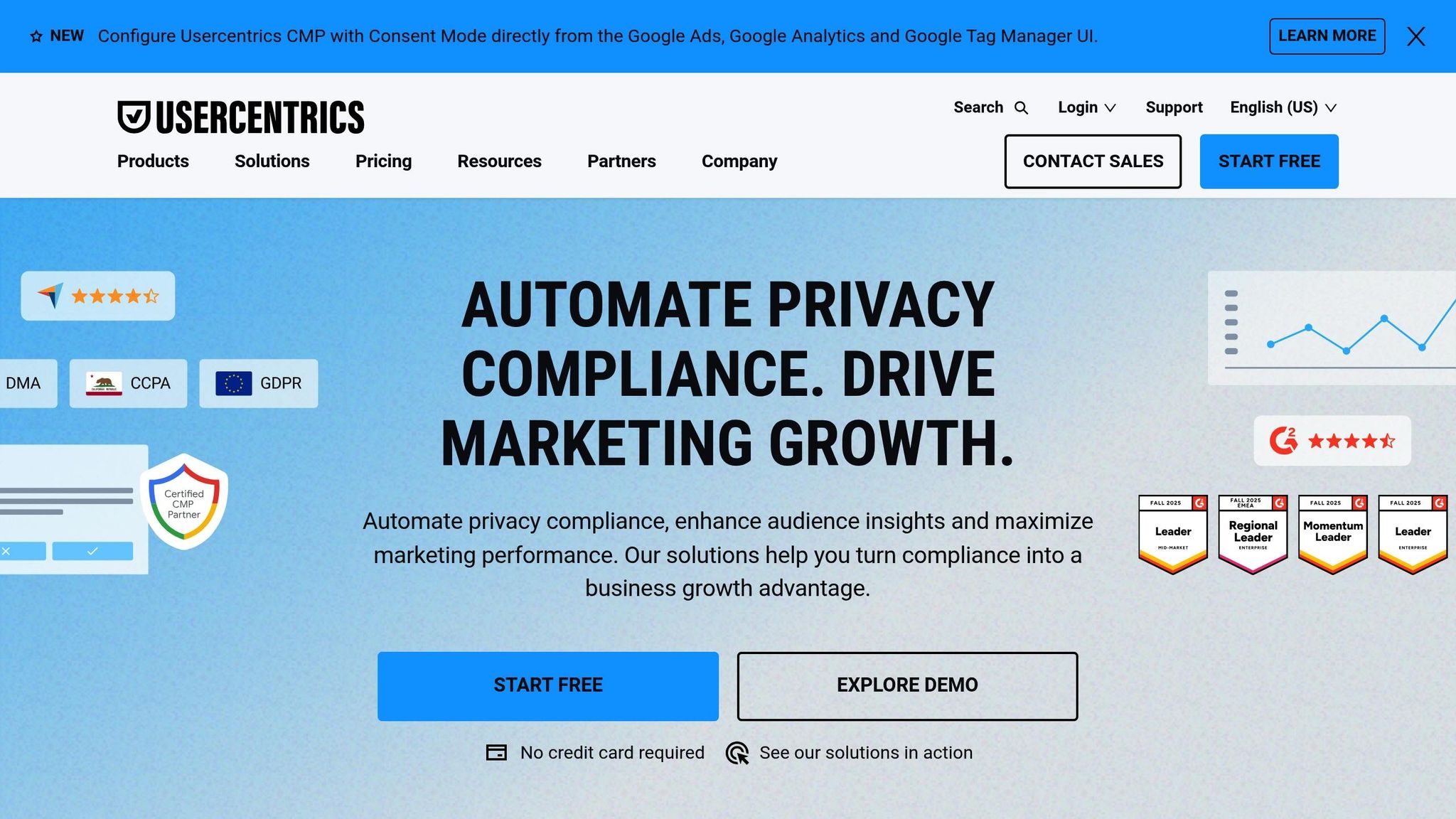
Usercentrics provides a consent management platform designed to help businesses maintain compliance with GDPR and CCPA regulations. It offers real-time insights into how users interact with consent banners and how those decisions influence marketing activities.
Consent Metrics Tracked
The platform monitors key metrics such as consent rates and withdrawal frequency. It also categorizes consent for critical areas like ad personalization, analytics, and marketing - essential for creating compliance reports. For email marketing, Usercentrics supports double opt-in processes, ensuring email subscriptions are verified and documented as proof of consent. This detailed tracking makes every consent interaction measurable and easy to report on.
Audit-Readiness
Usercentrics simplifies regulatory inspections by logging each consent decision with details like time, location, and category. These logs meet the documentation requirements for GDPR, CCPA, and other regulations. Additionally, the platform archives versions of consent banners and tracks their changes over time, ensuring transparency in data collection practices. This feature can be invaluable in resolving disputes or demonstrating compliance.
Compliance Support
To address varying regulatory requirements, Usercentrics automatically applies stricter rules for users in the EU (GDPR) and California (CCPA). The platform enables purpose-specific consent, allowing businesses to clearly outline what content users will receive, how often communications will occur, and why their data is being collected. This clarity not only reduces the risk of compliance issues but can also improve email deliverability by targeting only genuinely interested users. Usercentrics also recommends refreshing consent annually or after significant changes in data processing practices.
Integration Capabilities
Usercentrics integrates seamlessly with tools like Google Tag Manager, Meta Pixel, and LinkedIn Insight Tag, while also supporting real-time updates to CRM and automation systems. It ensures compliance by automatically blocking or enabling tracking tags based on user consent. For example, analytics scripts and conversion pixels are only activated when users grant the necessary permissions, aligning with compliance measures like Consent Mode v2 for EU users.
Consent preferences are synced directly into CRM systems and marketing automation platforms through native integrations and API connections, with changes reflected in real time. The platform also allows businesses to map consent categories to specific tools in their marketing stack, ensuring that analytics tools or retargeting pixels operate only when users have given explicit permission. This seamless flow of compliance data across marketing and analytics systems helps maintain regulatory adherence while optimizing operational efficiency.
2. TrustArc
TrustArc is a consent management platform designed to help businesses navigate the maze of privacy regulations. It offers robust tools for tracking and reporting user consent, with a special focus on adapting to regional privacy requirements.
Consent Metrics Tracked
TrustArc keeps a close eye on key consent metrics like consent rates (the percentage of users who agree to data collection), withdrawal rates, and preferences across categories such as marketing, analytics, and advertising. These insights help businesses understand user behavior and regional variations, enabling them to fine-tune their data collection strategies. For example, tracking withdrawal rates can pinpoint issues in how consent is requested or managed.
Audit-Readiness
One of TrustArc's strengths is its detailed logging of consent interactions. It records when consent was given, what information was shown to users, and any changes made. This creates a reliable audit trail that businesses can use to demonstrate compliance. The platform also generates reports that assess how well consent processes are working and ensure user preferences are respected. By timestamping interactions and logging all details, TrustArc supports compliance across multiple jurisdictions.
Compliance Support
TrustArc is built to help organizations comply with major privacy laws like GDPR in the EU, CCPA in California, and new regulations emerging around the world. It secures user consent before processing data, provides clear opt-out options, and keeps detailed records tailored to specific regional requirements. The platform also incorporates Privacy by Design principles, embedding privacy safeguards into every stage of data management. For instance, it maps data processing activities to consent categories that align with user preferences, ensuring transparency and accountability.
Integration Capabilities
TrustArc integrates seamlessly with popular marketing platforms to ensure consent signals are communicated effectively. For example, it syncs with email service providers to automatically update suppression lists based on user choices, preventing unauthorized marketing communications. If a user withdraws consent, TrustArc halts data processing and updates suppression lists in real time.
The platform also works with analytics tools and advertising platforms, ensuring that tracking pixels and conversion events are only triggered when users have given the appropriate consent. It supports integrations with tools like Google Tag Manager, CRM systems, and marketing automation platforms. Real-time dashboards provide a clear view of acceptance rates, rejections, and consent preferences by category and region.
To further enhance its functionality, TrustArc includes A/B testing capabilities. Businesses can experiment with different consent banner designs, messaging styles, and layouts to see what resonates most with users. By analyzing metrics like acceptance rates and interaction patterns, companies can optimize their consent experiences based on data-driven insights. These features make TrustArc a powerful tool for managing consent efficiently and effectively.
sbb-itb-6e7333f
3. OneTrust
OneTrust is a consent management platform designed to help businesses track user consent and meet compliance requirements across multiple jurisdictions. It provides tools for detailed metrics tracking, automated reporting, and seamless integration with marketing systems, ensuring user privacy is respected at every interaction.
Consent Metrics Tracked
OneTrust monitors a wide range of consent-related metrics, including consent rates, withdrawal rates, and category-specific consents for purposes like ad personalization, analytics, and marketing. These metrics can be broken down by region and device, offering insights into local user behaviors. By keeping track of this data, businesses can create detailed audit trails that show when consent was given, by whom, and for what specific purposes - critical information for regulatory audits.
The platform’s granular segmentation capabilities allow businesses to identify areas where targeted adjustments might improve consent rates. These insights feed directly into OneTrust's automated audit features, simplifying compliance efforts.
Audit-Readiness
OneTrust streamlines the audit process with automated tools that generate compliance documentation and reports. It securely maintains consent records, complete with timestamps, user identifiers, and specific consent choices, creating a reliable and unchangeable audit trail. This setup not only reduces the time spent on manual documentation but also allows businesses to segment audit data by region, purpose, or time frame, making it easier to demonstrate compliance.
The platform also tracks changes in user preferences, including consent withdrawals, ensuring that businesses consistently respect opt-outs. With strong encryption and strict access controls, OneTrust safeguards consent data both during transmission and storage. It also keeps detailed audit logs to meet data protection standards.
Compliance Support
To simplify compliance further, OneTrust offers tools tailored to specific regulations. The platform includes consent templates and workflows that align with laws like GDPR (EU), CCPA (California), and LGPD (Brazil). It automatically adjusts consent requirements based on user location, collecting only the necessary permissions for each region. Features like double opt-in workflows for email and SMS ensure users verify their subscriptions before being added to marketing lists.
Pre-built consent categories and regularly updated regulatory guidelines help reduce the workload for legal and compliance teams while fostering trust with users.
Integration Capabilities
OneTrust integrates seamlessly with popular marketing platforms such as Google Tag Manager, Google Ads, Meta Pixel, LinkedIn Insight Tag, and a variety of email marketing tools. It also connects with CRM systems, marketing automation platforms, and analytics tools, enabling real-time updates to ensure user choices are respected throughout the marketing ecosystem. If a user withdraws consent, OneTrust automatically updates connected systems to stop processing that individual’s data.
The platform is also compatible with Google Consent Mode v2, a requirement for EU users starting in March 2024. This integration allows OneTrust to relay user consent status to Google, preserving campaign performance data while enabling conversion modeling based on consented user behavior.
Additionally, OneTrust provides marketing dashboards that highlight how consent impacts metrics like audience size, campaign reach, and conversion rates. These dashboards help teams analyze consent trends by campaign, traffic source, device type, and geography. A/B testing of consent banner designs further supports efforts to refine and improve the user consent experience over time.
4. Piwik Pro
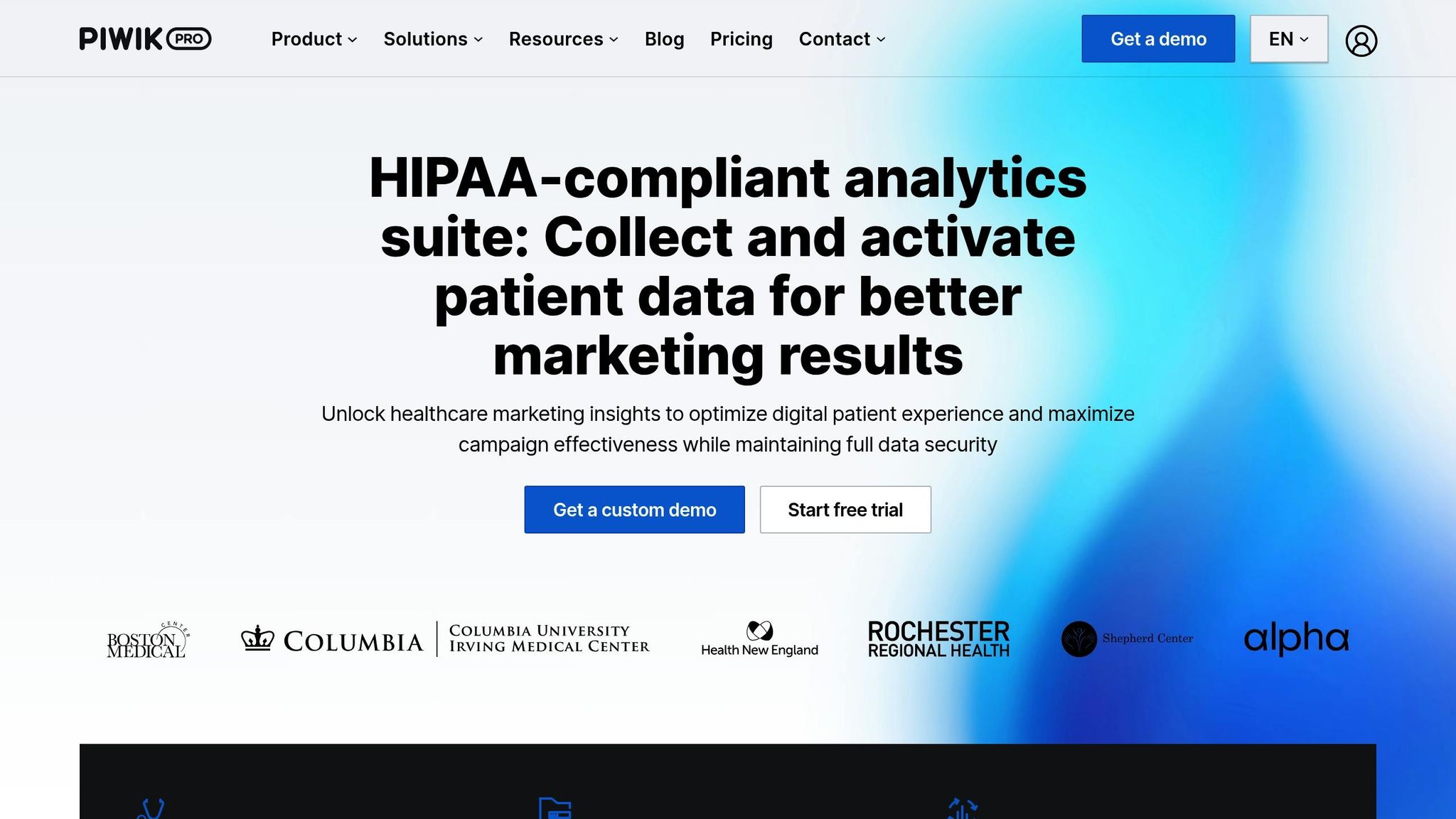
Piwik Pro is a platform that combines consent management with analytics, helping businesses track and manage user consent in line with data protection laws. By integrating consent tracking with analytics, it offers deep insights into user preferences while reducing dependency on third-party data processors.
Consent Metrics Tracked
Piwik Pro keeps an eye on a variety of consent-related metrics. These include consent acceptance rates, rejection rates, withdrawal rates, and how user consent preferences evolve over time. It also provides detailed tracking of consent categories - such as analytics, marketing, and functional cookies - while recording banner impressions and user interactions with those banners.
Audit-Readiness
A key feature of Piwik Pro is its focus on audit-readiness. The platform logs every consent-related action, complete with timestamps for when consent is given, modified, or withdrawn. This makes it easier for businesses to demonstrate compliance during audits or legal reviews. To protect sensitive records, Piwik Pro uses data encryption and offers configurable retention policies. For organizations needing greater control over their data, the platform also supports on-premise deployment options.
Compliance Support
Piwik Pro is designed to help businesses comply with major privacy regulations like GDPR, CCPA, and other regional laws. It tracks explicit user consent for data processing and maintains detailed records of consent preferences. The platform also makes it simple for users to withdraw or modify their consent, supporting the "right to withdraw." This ensures businesses can meet regulatory requirements while respecting user rights.
Integration Capabilities
Piwik Pro stands out with its ability to integrate smoothly with marketing and CRM tools. These integrations allow consent data to sync automatically, ensuring customer profiles are always up to date. This helps prevent marketing communications from being sent to users who have withdrawn consent, reducing compliance risks and building trust with customers.
The platform also offers real-time reporting dashboards and customizable reports, enabling teams to analyze consent metrics by date range, user segment, or consent category. These insights can guide improvements in consent collection strategies. Additionally, businesses can A/B test consent banners to increase acceptance rates. For companies using email marketing services - like those listed on the Email Service Business Directory (https://emailservicebusiness.com) - these integration features ensure that marketing efforts align with user consent preferences.
Pros and Cons
Building on the detailed metric insights mentioned earlier, this section dives into the practical pros and cons of popular consent tracking tools. Each platform comes with its own strengths and limitations, influencing the choice based on specific needs and budget. Picking the right tool is critical for ensuring compliance and efficiently managing user consent.
Usercentrics shines with its ability to collect real-time consent data and track it across multiple channels. It integrates seamlessly with marketing platforms and analytics tools, making it easier for organizations already using these systems to implement. Its reporting features are particularly helpful during audits, especially under regulations like GDPR and CCPA. However, the platform's steep learning curve may be challenging for smaller organizations. Additionally, its tiered pricing - based on the number of monthly consent records - works well for smaller businesses but can become costly for high-traffic websites.
TrustArc is a standout for its focus on audit readiness and compliance documentation. It simplifies the audit process with detailed compliance reports and tools for evidence collection. Automated alerts ensure organizations stay on track with regulatory standards, which is especially valuable for businesses in highly regulated sectors. However, TrustArc’s higher costs and enterprise-focused features make it better suited for large organizations managing complex compliance needs.
OneTrust offers robust tracking capabilities, capturing metrics like consent rates, withdrawals, and preference changes over time. It supports various consent types - explicit, implicit, and legitimate interest - and provides detailed records of user preferences. The platform also integrates privacy impact assessments and data inventory management, offering a well-rounded governance solution. Its integration marketplace connects with hundreds of third-party applications, providing flexibility for diverse tech environments. That said, its extensive features can lead to higher implementation costs and may require dedicated resources for setup and maintenance. The interface can also be challenging for non-technical users.
Piwik Pro combines consent management with analytics, offering a unified solution that reduces reliance on third-party data processors. It provides a more affordable entry point for organizations focused on analytics, with consent management as a secondary feature. Its on-premise deployment option is appealing for businesses needing strict control over data storage and security. While it performs well under GDPR with features like data minimization, its consent management tools may not be as robust as those of platforms designed specifically for multi-jurisdictional compliance.
| Feature | Usercentrics | TrustArc | OneTrust | Piwik Pro |
|---|---|---|---|---|
| Metrics Tracked | Real-time consent data, multi-channel tracking | Compliance reports, evidence collection, alerts | Consent capture/withdrawal rates, preference changes | Consent acceptance/rejection rates, withdrawal rates |
| Audit-Readiness | Strong reporting, GDPR/CCPA templates | Detailed audit documentation and support | Comprehensive logs, automated compliance updates | Standard audit trail features |
| Compliance Support | GDPR, CCPA, pre-configured templates | Multi-framework support | Broad multi-jurisdiction coverage | GDPR-focused, data minimization |
| Integration Capabilities | Pre-built marketing/CRM integrations | Enterprise system integrations | Extensive third-party app marketplace | Integrated with its analytics platform |
| Best For | Small to medium-sized businesses | Large enterprises in regulated industries | Organizations with diverse tech stacks | Businesses combining analytics and consent |
| Pricing Model | Tiered pricing by consent records | Higher upfront costs, enterprise focus | Flexible per-domain or per-record pricing | Affordable entry points |
These comparisons emphasize key factors like implementation, cost, and scalability. For businesses operating in multiple jurisdictions or planning for growth, it’s essential to choose a platform that offers multi-framework support and a pricing model that scales with their needs. Security certifications and clear data handling practices are also critical to reduce risks of exposing sensitive consent information.
Implementation challenges vary by platform. Usercentrics often requires integrating consent tools across multiple digital properties, which may involve a thorough audit before rollout. TrustArc implementations typically demand detailed mapping of data processing activities to consent categories, making privacy impact assessments a priority. OneTrust setups can face hurdles in change management, requiring executive support and staff training to adapt to new workflows. Piwik Pro may involve a transitional period where businesses run both traditional analytics and consent-first systems in parallel.
For email marketers, platforms with strong integrations can significantly reduce deployment time and lower compliance risks, ensuring smoother operations.
Conclusion
Select a consent tracking tool that aligns with your compliance needs and works effortlessly with your marketing systems. Tools like Usercentrics, TrustArc, OneTrust, and Piwik Pro each bring their strengths to the table, but no single platform is perfect for every organization. The key is to evaluate which tool best addresses your specific regulatory and technical requirements.
When choosing a tool, focus on meeting the regulations relevant to your business. Look for platforms that provide jurisdiction-specific templates and the ability to monitor compliance metrics by region - an essential feature for businesses operating across multiple countries.
Integration is another critical factor. Ensure the tool can sync consent statuses with your email service provider. This step helps you avoid sending marketing communications to users who haven’t opted in, keeping your campaigns compliant and targeted.
Cost is also an important consideration. Weigh the platform's features, scalability, and support against your long-term compliance goals to find a solution that fits your budget without compromising on functionality.
To strengthen your compliance strategy, track audit trails and monitor key metrics like consent acceptance rates, withdrawal patterns, and time-to-compliance. These metrics not only demonstrate adherence to regulations but also provide insights to refine your processes.
Proper implementation is crucial for success. This may involve conducting detailed audits, mapping out your data flows, and training your team to ensure the tool integrates smoothly with your existing systems. Addressing potential technical or organizational hurdles upfront can save time and effort during the rollout.
For businesses that rely heavily on email marketing, accurate consent tracking offers more than just compliance - it can also boost campaign performance. By targeting only users who’ve actively opted in, you’re likely to see higher engagement rates, fewer spam complaints, a stronger sender reputation, and reduced legal risks.
FAQs
How do consent tracking tools help businesses stay compliant with data privacy laws like GDPR and CCPA?
Consent tracking tools are essential for businesses aiming to meet the requirements of data privacy laws like GDPR and CCPA. These tools offer a streamlined way to manage and document user consent, making it easier to stay compliant. They help businesses keep track of when and how consent was obtained, ensuring records are readily available for audits.
Some of the key data points these tools monitor include timestamps of consent, user preferences, and whether users have opted in or out. By keeping these records accurate and up to date, businesses show a commitment to transparency and safeguarding user data, while also minimizing the risk of facing penalties for non-compliance.
What’s the difference between consent rates, opt-in rates, and non-interaction rates, and why do they matter?
Tracking consent rates, opt-in rates, and non-interaction rates is essential for understanding how users engage with your consent requests and ensuring compliance with data privacy laws.
- Consent rates show the percentage of users who actively agree to share their data. This metric helps measure how well your business is meeting compliance requirements.
- Opt-in rates focus on the users who voluntarily agree to receive communications, giving insight into how effective your messaging and consent processes are.
- Non-interaction rates capture the percentage of users who neither accept nor decline consent requests. High non-interaction rates can signal the need to refine your approach to better engage users.
Regularly reviewing these metrics not only helps maintain compliance but also builds user trust and improves your communication strategies. By understanding these numbers, you can create more user-friendly consent experiences that align with both legal standards and user preferences.
What is the audit trail completeness metric, and how can businesses use it to stay compliant and address disputes?
The audit trail completeness metric evaluates how effectively a business records and tracks user consent actions, such as opt-ins, opt-outs, and updates to preferences. It ensures that every step in the consent process is properly documented and readily available for regulatory compliance.
Keeping a thorough and accurate audit trail allows businesses to show adherence to data privacy laws like GDPR or CCPA. It also enables quick resolution of disputes by providing clear evidence of when and how users granted or revoked consent. This not only minimizes legal risks but also strengthens customer trust.