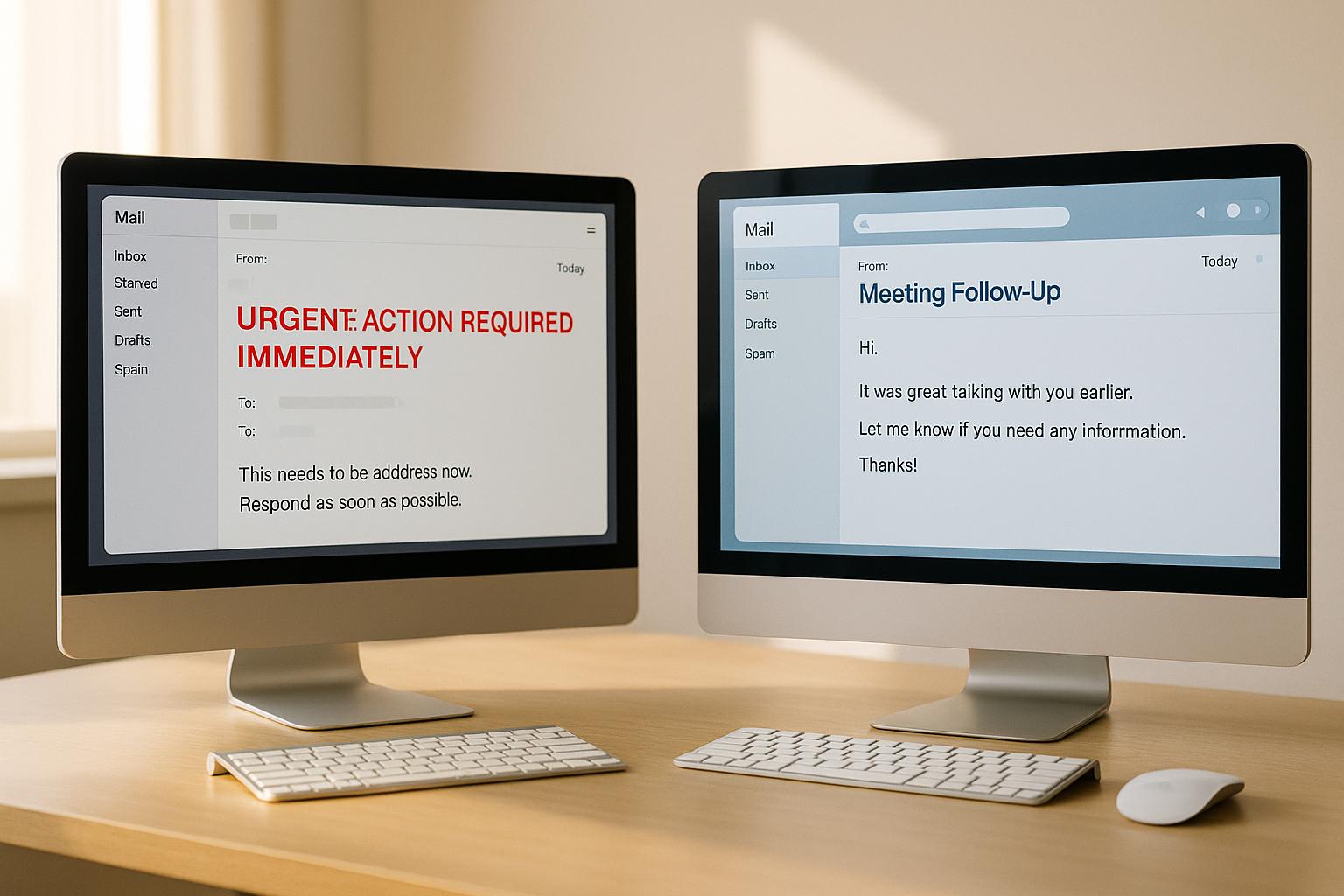
Real-time customer journey engines are reshaping email marketing by sending personalized emails instantly based on customer actions, like cart abandonment or browsing behavior. These tools integrate with email platforms to create automated workflows that respond to user behavior in real time, turning static campaigns into dynamic, tailored conversations. Businesses using real-time engines report up to a 30% increase in email open rates and a 20% boost in conversions compared to traditional email methods.
Here’s a quick summary of six platforms leading this trend:
- ActiveCampaign: Simple automation for small to mid-sized businesses with AI-driven segmentation and omnichannel integration.
- MoEngage: Great for mobile-centric brands, offering strong app engagement and cross-channel messaging.
- Customer.io: API-first platform ideal for tech-savvy teams needing detailed event-driven workflows.
- Salesforce Marketing Cloud: Best for enterprises, with advanced tools for real-time personalization and CRM integration.
- Maestra: Affordable and user-friendly for mid-sized businesses, with real-time triggers and dynamic segmentation.
- Bloomreach Engagement: Enterprise-grade platform with AI-powered personalization and fast data processing.
Each platform suits different needs based on business size, technical expertise, and budget. For smaller teams, ActiveCampaign or Maestra may be the best fit. Larger enterprises might prefer Salesforce Marketing Cloud or Bloomreach Engagement for their robust features. Evaluate your goals, resources, and customer base to choose the right tool for your business.
How Does Real-time CRM Data Boost Email Personalization? - TheEmailToolbox.com
1. ActiveCampaign
ActiveCampaign combines email marketing, automation, CRM, and machine learning into one platform. Its standout feature? The ability to respond to customer actions in real time, turning ordinary campaigns into personalized conversations. For instance, if a customer leaves items in their cart or browses specific products, ActiveCampaign can send a follow-up email within seconds, delivering the perfect message at just the right moment.
Real-Time Personalization
By tracking customer behavior - like website visits, email interactions, and purchase history - ActiveCampaign creates behavior-triggered workflows that adjust in real time. This ensures messages are sent when they matter most, boosting the likelihood of engagement and conversion.
Here’s an example: A retail brand used ActiveCampaign to set up triggers for cart abandonment and personalized product recommendations. By segmenting users based on their browsing and purchase habits, they saw a 25% jump in email open rates and a 15% increase in conversions in just three months. With automation handling repetitive tasks, marketing teams can focus on creativity and strategy.
The predictive sending feature takes it a step further. Using AI, it determines the best time to send emails to each individual contact. Instead of blasting emails to everyone at once, the system schedules delivery when recipients are most likely to engage, naturally improving open and click-through rates.
This level of personalization is just the beginning of what ActiveCampaign offers.
AI-Driven Segmentation
ActiveCampaign’s segmentation engine uses AI and machine learning to group contacts based on behavior, engagement, and predictive insights. It can identify high-value customers, flag potential churn risks, and highlight likely buyers. As new data comes in, these segments update automatically, ensuring content stays relevant to each group.
This dynamic segmentation eliminates the need for marketers to constantly rebuild lists or manually tweak criteria. The platform learns from customer interactions, refining segments over time to improve targeting. Businesses using these features often see 20-30% higher open rates compared to traditional one-size-fits-all campaigns.
Thanks to machine learning, ActiveCampaign enables personalized communication at scale. It tailors messages for different audience groups without burdening marketing teams, striking a balance between automation and meaningful customer engagement - even as your audience grows.
Omnichannel Integration
ActiveCampaign doesn’t stop at email. It integrates with SMS, site messaging, and social media, creating a seamless experience across multiple channels. For example, if an email goes unopened, the system can send a follow-up SMS. Or, if a customer clicks an email link, they might see a personalized web message on their next visit. These cross-channel triggers ensure consistent engagement at every touchpoint.
The platform supports over 900 integrations, including popular e-commerce platforms, CRM tools, and analytics services. This creates a unified view of each customer, allowing for highly personalized messaging across all channels - whether through a website, mobile app, or email. The automation builder makes it easy to design complex, multi-step customer journeys with real-time triggers and conditional logic, all without needing to write a single line of code. This makes it accessible to businesses of all sizes, even those without dedicated tech teams.
Pricing
ActiveCampaign’s pricing reflects its robust feature set and scales with your business. As of November 2025, there are four tiers:
- Lite: $29/month, offering basic email marketing, automation, and chat support.
- Plus: $49/month, which includes CRM tools, advanced automation, SMS capabilities, and more integrations.
- Professional: $149/month for up to 2,500 contacts, adding predictive sending, split automations, and custom reporting.
- Enterprise: Custom pricing for advanced features like SLA support, custom reporting, and dedicated account management.
| Plan | Monthly Price (USD) | Key Features |
|---|---|---|
| Lite | $29 | Email marketing, basic automation, chat |
| Plus | $49 | CRM, advanced automation, SMS, integrations |
| Professional | $149 | Predictive sending, split automations, reporting |
| Enterprise | Custom | Custom reporting, SLA support, advanced features |
Pricing increases with contact volume, but many small to mid-sized businesses find it an affordable option for the value it delivers. Reviews on platforms like G2 and Capterra consistently rate ActiveCampaign between 4.6 and 4.7 out of 5, with users highlighting its powerful automation tools, ease of use, and responsive customer support.
For businesses in the U.S. comparing email marketing platforms, the Email Service Business Directory (https://emailservicebusiness.com) offers a helpful tool to evaluate ActiveCampaign against other solutions. It’s a great resource for finding the best fit for your needs and budget.
2. MoEngage
MoEngage is a customer engagement platform designed to streamline personalized interactions by using real-time data to map customer journeys. It combines tools for real-time personalization, AI-based segmentation, and omnichannel messaging into a single dashboard. This setup allows businesses to create dynamic customer experiences that evolve in real time. By tracking user behavior across websites, mobile apps, and email interactions, MoEngage ensures messages are delivered at just the right moment.
What makes MoEngage stand out is its emphasis on mobile and app-based engagement, while still offering strong email marketing features. It supports communication through email, SMS, push notifications, and in-app messaging - all from one platform. Let’s explore how MoEngage’s features help businesses drive engagement effectively.
Real-Time Personalization
MoEngage keeps a close eye on customer activity in real time, enabling instant updates to email content. For instance, if a customer abandons their cart, browses a particular product category, or completes a purchase, the platform can quickly send a tailored email with recommendations or special offers. This timely approach increases the likelihood of customer action. A U.S.-based retail brand that utilized MoEngage’s AI-powered recommendations for cart abandonment emails reported a 25% jump in email open rates and a 15% rise in recovered sales within just three months.
AI-Driven Segmentation
With machine learning at its core, MoEngage segments users based on factors like demographics, behavior, engagement levels, and predicted intent. This allows businesses to identify high-value customers, detect users likely to churn, and recognize repeat buyers. Since these segments are updated in real time, marketers can deliver relevant content without constantly managing lists manually. Brands using MoEngage’s AI-driven segmentation have seen email open rates improve by up to 40% and conversion rates increase by 25% compared to traditional methods.
Omnichannel Integration
MoEngage enables businesses to coordinate customer interactions across email, SMS, push notifications, and in-app messaging - all from one place. Its visual journey builder makes it easy for marketers to create detailed, multi-step campaigns with real-time triggers and conditional logic - no coding required. The platform’s omnichannel approach ensures messages are delivered through the channels customers prefer. Additionally, MoEngage integrates seamlessly with popular CRM systems, e-commerce platforms, and analytics tools using APIs, SDKs, and pre-built connectors. Supporting over 1 billion users globally, MoEngage serves clients in industries such as e-commerce, finance, travel, and media.
Pricing
MoEngage offers customized pricing based on factors like business size, user count, and messaging volume. This flexible model is ideal for mid-sized and enterprise businesses looking to scale. While specific pricing details aren’t publicly available, industry feedback suggests MoEngage is competitively priced. As of November 2025, it holds a 4.6 out of 5 rating on G2, based on over 400 verified reviews. Users often highlight its user-friendly interface, detailed analytics, and seamless omnichannel management, though some mention a learning curve for advanced features.
For U.S. businesses exploring email marketing platforms, the Email Service Business Directory is a helpful resource for comparing MoEngage with other leading solutions.
3. Customer.io
Customer.io is a messaging automation platform built for teams that need detailed control over their campaigns. It combines a code-first approach with a user-friendly visual interface, making it versatile for both marketers and developers. Through APIs and webhooks, it enables event-driven messaging and advanced workflows. Marketers can design intricate customer journeys without writing code, while developers can create custom integrations. This balance makes it especially useful for SaaS companies, mobile apps, and digital product teams looking to connect email marketing with product usage data, subscription events, and transactional triggers.
This setup allows for highly precise, event-driven personalization.
Real-Time Personalization
Customer.io uses event-driven triggers to send customized emails based on user actions like subscription upgrades, feature usage, or payment issues. For instance, if a user upgrades their subscription, the platform can instantly send an onboarding email with tips tailored to their new plan. Similarly, it can send a conversion-focused message as a trial period approaches its end.
Its liquid templating feature allows dynamic insertion of customer data into emails, ensuring each message feels personal. Additionally, Customer.io supports A/B testing within workflows, helping teams fine-tune their campaigns for better engagement.
But it doesn’t stop at email - Customer.io extends its reach across multiple channels for a seamless user experience.
Omnichannel Integration
Customer.io manages communications across email, SMS, push notifications, and webhooks - all from a single platform. With its visual builder, teams can design complex, multi-channel campaigns using branch logic and time delays. For example, a workflow might start with an email, followed by a push notification if the email isn’t opened within 24 hours, and then an SMS if there’s still no engagement.
The platform integrates easily with data warehouses, CRM systems, and product analytics tools, thanks to its robust API and pre-built connectors. It supports segment-based campaigns for targeting specific user groups and broadcast messages for one-time announcements. Its data pipeline ensures two-way syncing of customer data, allowing teams to analyze engagement metrics in-depth.
Customer.io also excels at handling transactional emails, keeping critical communications like password resets or payment confirmations separate from marketing emails to ensure timely delivery.
Pricing
Customer.io offers a usage-based pricing model that adjusts with the number of customer profiles and the volume of messages sent. For startups and small teams, there’s a free tier to explore the platform. Paid plans scale based on usage, with detailed dashboards to help teams track activity and manage budgets effectively. This approach aligns costs with engagement, making it appealing for businesses that are growing.
With its advanced technical capabilities and flexible pricing, Customer.io is a strong choice for businesses aiming to improve real-time customer interactions.
For U.S. businesses comparing email marketing platforms with robust technical features, the Email Service Business Directory provides insights into Customer.io and other solutions tailored for data-driven teams.
4. Salesforce Marketing Cloud
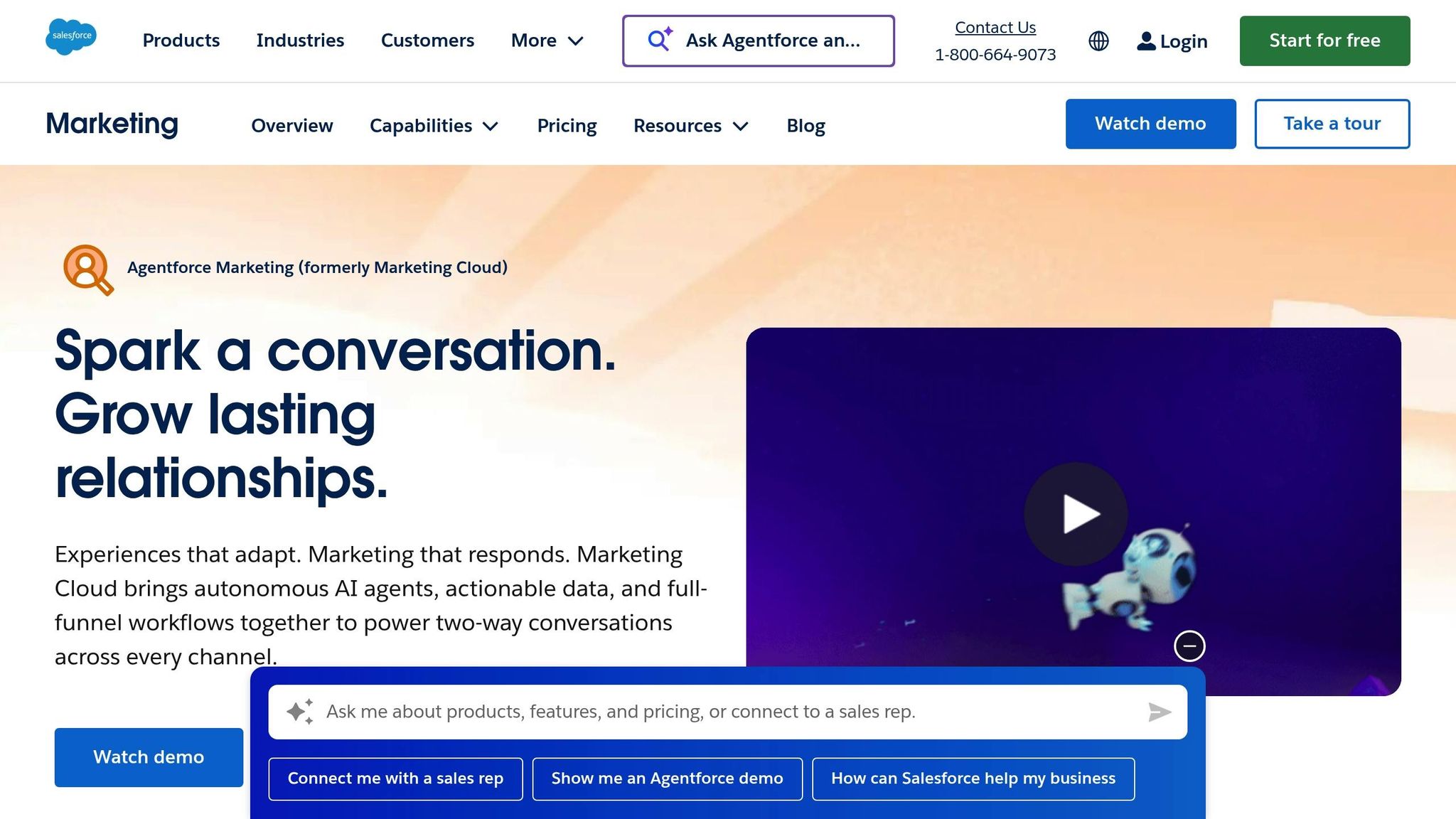
Salesforce Marketing Cloud stands out as a powerful platform for businesses managing large-scale marketing operations. Designed for enterprises and mid-sized companies with extensive customer databases, it offers advanced automation and real-time customer journey tools. Its deep integration with the broader Salesforce ecosystem allows marketers to unify CRM data, purchase history, and customer service interactions, creating a seamless connection between marketing campaigns and customer data.
What makes Salesforce Marketing Cloud particularly effective is its Journey Builder tool. This feature enables marketers to set up automated workflows that react instantly to customer actions, replacing outdated batch email systems that rely on fixed schedules. This event-driven approach ensures timely, relevant interactions with customers, laying the groundwork for more personalized and immediate engagement.
Real-Time Personalization
With Salesforce Marketing Cloud, personalization happens in real time through its Journey Optimizer. This tool uses live customer profiles and behavioral signals to trigger tailored messages across various channels. Instead of relying on pre-scheduled emails, the platform responds immediately to actions like cart abandonment, product page visits, or email opens.
For instance, if a customer browses winter coats, they might receive an email showcasing those products. If they don’t click within 24 hours, the system could send an SMS with a limited-time discount. On the other hand, if they engage with the email, they might be offered free shipping instead. This dynamic approach ensures every interaction feels timely and relevant.
According to Salesforce, businesses using Marketing Cloud have experienced up to a 27% boost in campaign effectiveness and a 30% increase in customer engagement by leveraging these real-time personalization capabilities.
AI-Driven Segmentation
Salesforce Marketing Cloud incorporates Einstein AI to take segmentation to the next level. This AI engine analyzes customer behavior in real time, automatically creating dynamic audience groups based on factors like purchase history, engagement patterns, and lifecycle stages. By eliminating the need for manual segmentation, it frees up marketers to focus on strategy while the system handles the heavy lifting.
Einstein AI also offers predictive analytics, helping marketers identify high-value customers, predict churn risks, and determine the best actions for individual users. For example, it can recommend the optimal time to send an email for maximum engagement or suggest content variations tailored to different audience segments. This data-driven approach ensures campaigns are both efficient and effective.
Beyond basic demographics or behaviors, the platform’s predictive modeling anticipates customer needs before they even articulate them, making it a game-changer for proactive marketing.
Omnichannel Integration
Salesforce Marketing Cloud excels at orchestrating messages across multiple channels, including email, SMS, push notifications, in-app messaging, and web. With the Journey Optimizer, marketers can visualize and monitor customer journeys in real time, ensuring consistent messaging across all touchpoints.
For example, a journey might start with an email as the primary channel. If the email isn’t opened, the system could follow up with an SMS. If the customer engages with the email, redundant messages on other channels are suppressed to prevent over-messaging. This coordinated approach ensures that messages are delivered in the right sequence, at the right time, and through the most effective channel.
Marketers using Salesforce’s omnichannel capabilities report a 23% higher conversion rate compared to single-channel campaigns. The platform’s integration with Salesforce CRM adds even more value, pulling in data like browsing behavior, purchase history, and customer service interactions to create a complete customer profile. This unified view allows the system to make smarter decisions about messaging, timing, and channel selection.
Additionally, real-time monitoring and visualization tools let marketers track performance metrics as campaigns unfold. Features like A/B testing help teams determine which strategies resonate most with different audience segments, ensuring continuous improvement.
Pricing
Salesforce Marketing Cloud offers custom pricing based on factors like business size, feature needs, and email volume. Entry-level plans start at $400 per month, while more advanced packages, which include tools like Journey Builder, Einstein AI, and omnichannel integration, range from $1,250 per month to several thousand dollars for enterprise-level features. Additional costs may apply for extras like advanced analytics, SMS capabilities, or expanded API access.
While the pricing reflects the platform’s focus on larger organizations, the robust features and scalability make it a worthwhile investment for businesses managing complex marketing operations and large customer bases.
For U.S. businesses exploring enterprise email marketing platforms with real-time capabilities, the Email Service Business Directory offers a detailed look at Salesforce Marketing Cloud and other solutions tailored for data-driven teams managing customer journeys.
sbb-itb-6e7333f
5. Maestra

Maestra is an AI-driven platform designed to streamline customer journey management and marketing automation for mid-sized and growing businesses. It prioritizes real-time personalization without the complexity or high costs often associated with enterprise-level tools.
What makes Maestra stand out is its ability to act instantly. By processing customer data in milliseconds, the platform enables marketers to respond immediately to customer actions - whether it's sending a follow-up after an abandoned cart, a product view, or engagement with a previous email.
Real-Time Personalization
Maestra's real-time personalization engine is all about keeping up with the customer in the moment. It dynamically tailors email content, subject lines, and even send times based on live customer behavior. For example, if someone browses a specific product category but leaves without purchasing, Maestra can send a follow-up email featuring personalized recommendations or discounts to encourage a purchase.
According to industry benchmarks, platforms that leverage real-time personalization and AI-based segmentation can see email open rates improve by up to 30% and conversion rates increase by 20–25% compared to traditional bulk email campaigns. By using behavioral data to predict what customers need, Maestra helps marketers craft emails that feel more like genuine, one-on-one conversations.
AI-Driven Segmentation
Maestra takes segmentation to the next level by automatically grouping customers based on their behavior and predictive analytics. These dynamic audience groups are constantly updated as customer actions evolve, removing the need for manual adjustments. For instance, if a customer previously labeled as "low engagement" starts showing more activity, Maestra can reassign them to a more engaged segment and adjust the messaging strategy accordingly.
The platform also uses predictive insights to determine the best times to send emails, analyzing past engagement patterns to maximize effectiveness.
Omnichannel Integration
To create a seamless customer experience, Maestra integrates email with SMS, push notifications, and in-app messaging. This ensures that customers receive messages on their preferred channels, enhancing the overall journey. Research shows that omnichannel campaigns using integrated touchpoints can deliver 18% higher customer retention rates compared to single-channel efforts.
With a unified view of customer interactions, marketers can track the entire journey - from the first point of contact to conversion - and refine their strategies for better results.
Pricing
Maestra offers flexible pricing tiers based on the number of contacts and feature requirements. Plans start at $99 per month, making it accessible for small businesses while still offering powerful automation tools. For organizations with more complex needs or larger contact lists, custom enterprise pricing is available.
The platform also provides a free trial or demo, allowing teams to test its features before committing. Additional costs may apply for advanced options like expanded API access or premium support.
Maestra is well-regarded by users, earning an average rating of 4.5 out of 5 on major review sites. Customers frequently highlight its user-friendly interface, efficient automation, and responsive support team. However, some users mention a learning curve for advanced features and express a desire for more detailed analytics in the base plans.
For U.S. businesses considering mid-tier email marketing platforms with real-time capabilities, the Email Service Business Directory offers a comprehensive comparison of Maestra and similar solutions. This resource can help teams evaluate features, pricing, and reviews to find the best fit for their marketing automation needs.
6. Bloomreach Engagement

Bloomreach Engagement is a high-level platform designed for brands that need advanced, real-time personalization across multiple channels. It combines a unified customer data platform with Loomi AI - an artificial intelligence engine specifically trained on e-commerce data - to deliver highly targeted email campaigns that adapt to customer actions in the moment.
What makes Bloomreach unique is its ability to process customer data in just 100 milliseconds. This speed allows marketers to respond instantly to browsing habits, purchases, and engagement signals. Emails are dynamically updated to reflect these real-time customer actions, enabling precise and timely triggers that resonate with individual behavior.
Real-Time Personalization
Bloomreach tracks customer activity across every channel. For example, if someone browses a particular product category, the platform can instantly send an email featuring personalized content and offers. Powered by Loomi AI, it predicts the best time to send emails and recommends products using both historical and real-time data. This approach goes far beyond basic segmentation, offering a tailored experience for every subscriber.
Take cart abandonment as an example. If a customer leaves a cart with running shoes, Bloomreach quickly sends a follow-up email. The email’s subject line, content, and visuals are customized based on that customer’s preferences and shopping behavior, creating a message that feels personal and relevant.
AI-Driven Segmentation
Loomi AI doesn’t just segment customers - it does so with a level of predictive accuracy that sets it apart. The system continuously evaluates each customer’s likelihood to make a purchase, automatically assigning them to high, medium, or low-value segments. This happens without any manual input.
These segments are dynamic, updating as customer behavior changes. For instance, if someone transitions from casual browsing to active shopping, the platform recognizes this and adjusts the messaging strategy accordingly. High-value customers can receive exclusive offers, while disengaged users might get re-engagement campaigns to spark their interest again.
The AI also identifies specific patterns, like customers who frequently return items or those who browse often but rarely buy. For these groups, Bloomreach can trigger targeted campaigns - such as loyalty rewards for frequent returners or exclusive discounts for hesitant buyers - helping to boost satisfaction and reduce churn.
Omnichannel Integration
Bloomreach coordinates campaigns across 13+ channels, including email, SMS, push notifications, in-app messaging, and display ads, using a visual scenario builder that ensures seamless, real-time customer journeys.
For example, if a customer doesn’t engage with an email, the platform can send a follow-up SMS or push notification. If they click on a link but don’t complete their purchase, a retargeting ad might appear later that day. This kind of coordination ensures customers receive a consistent experience, no matter where or how they interact with the brand.
Because Bloomreach tracks and analyzes every interaction within its unified customer data platform, marketers gain a complete view of the customer journey - from the first touchpoint to conversion. This visibility makes it easier to identify weak spots, fine-tune messaging, and adjust strategies based on real-world performance data.
Pricing
Pricing for Bloomreach Engagement is customized to suit enterprise-level needs. Costs depend on factors like business size, contact volume, and required features. While the platform is tailored primarily for mid-to-large organizations with complex marketing automation needs, its flexibility allows businesses to pay only for the features they require.
To get specific pricing details, companies must request a quote directly from Bloomreach. While this approach doesn’t offer the transparency of set pricing tiers, it ensures businesses receive a solution that aligns with their unique goals and requirements.
For U.S. companies exploring enterprise-level email marketing platforms, the Email Service Business Directory is a valuable resource. It offers a curated comparison of Bloomreach Engagement and other leading platforms, helping businesses evaluate features, pricing models, and service providers to find the best fit for their needs.
Advantages and Disadvantages
When it comes to real-time journey mapping, each platform brings its own set of strengths and challenges. The right choice depends on your technical expertise, business scale, and budget. Below is a concise comparison to help you make a quick, informed decision.
ActiveCampaign stands out with its easy-to-use automation builder, making it a solid choice for small to mid-sized businesses. It excels in creating personalized email journeys based on customer engagement. However, it may struggle with real-time processing and reporting for enterprises handling large volumes of data.
MoEngage takes a mobile-first approach, excelling in push notifications and cross-channel orchestration. It's particularly effective for businesses with high mobile app engagement. While its AI-driven tools optimize messaging, its email marketing capabilities lag behind platforms specifically designed for email campaigns.
Customer.io offers impressive flexibility through its API-first architecture, enabling tech-savvy teams to craft highly customized workflows. Its event-based triggers support near real-time responses, making it ideal for companies with strong developer resources. That said, its complexity can be a hurdle for teams without technical expertise, and its interface may feel less intuitive compared to more user-friendly platforms.
Salesforce Marketing Cloud provides enterprise-level features and seamless integration within the Salesforce ecosystem. Its Journey Builder supports sophisticated, multi-channel campaigns, enhanced by predictive insights powered by AI. However, its high cost and complex setup often require dedicated specialists, which can be a barrier for smaller organizations.
Maestra is designed for businesses seeking a quick and straightforward solution. Its simple journey mapping and transparent pricing make it appealing for those who prioritize ease of use. On the downside, it lacks the advanced personalization and integration capabilities needed for more intricate customer journey strategies.
Bloomreach Engagement caters to organizations with complex needs. It offers advanced real-time personalization and multi-channel orchestration. However, its high price, lengthy implementation process, and resource demands make it more suitable for larger enterprises with the capacity to handle its complexity.
| Platform | Best For | Key Strength | Main Limitation |
|---|---|---|---|
| ActiveCampaign | Small to mid-sized businesses | Intuitive automation and personalization | Limited real-time processing for large-scale data |
| MoEngage | Mobile-focused businesses | Strong push notifications and mobile engagement | Weaker email marketing tools |
| Customer.io | Tech-savvy teams with developer support | Flexible, API-driven workflows | Complex for non-technical users |
| Salesforce Marketing Cloud | Large enterprises using Salesforce CRM | Comprehensive integration and campaign management | High cost and intricate setup |
| Maestra | Companies needing quick deployment | Simple setup and clear pricing | Limited advanced features |
| Bloomreach Engagement | Enterprises with complex requirements | Advanced personalization and multi-channel orchestration | High cost and resource-heavy |
Your choice should align with your technical resources, budget, and the scale of your operations. For businesses with minimal technical expertise, platforms like ActiveCampaign or Maestra offer simplicity and ease of use. On the other hand, companies with development teams might find Customer.io's customization options more appealing. Larger enterprises with the means to invest in sophisticated solutions may benefit from the extensive capabilities of Salesforce Marketing Cloud or Bloomreach Engagement.
Keep in mind that subscription fees are just one part of the equation. A lower monthly cost might mean additional expenses for third-party integrations or consulting, while a higher-priced platform could deliver a more complete, ready-to-use solution.
Finally, consider the scale of your business. Smaller companies may need straightforward automation, while larger organizations might require platforms capable of handling complex, multi-channel campaigns and high customer volumes. For U.S.-based businesses, the Email Service Business Directory offers detailed comparisons of features, pricing, and user reviews, making it easier to identify the best option for your needs.
Conclusion
Real-time customer journey engines are reshaping email marketing in the US by moving away from outdated bulk campaigns and embracing personalized, behavior-driven communication. This approach delivers messages tailored to individual actions, leading to measurable improvements in engagement and results.
Each platform discussed offers distinct advantages. ActiveCampaign and Maestra stand out for their ease of use and quick setup, making them ideal for businesses seeking simplicity. Customer.io caters to tech-savvy teams looking for customization, while MoEngage shines for businesses focused on mobile engagement. For enterprises managing complex, large-scale operations, Salesforce Marketing Cloud and Bloomreach Engagement provide robust omnichannel solutions, though they come with higher costs and complexity.
The impact of these platforms is clear. Campaigns using behavior-triggered emails have shown open rates and retention improvements of around 30%. When emails are timely and relevant, customers are more likely to engage.
Choosing the right platform depends on your business's unique needs - consider factors like technical expertise, budget, and scale. For example, a small business with limited IT resources will have different priorities than a large corporation handling millions of customer interactions. Beyond subscription costs, think about implementation time, training, and integration expenses, as these all contribute to your overall investment.
For a detailed comparison of features and pricing, the Email Service Business Directory is a helpful resource for US businesses navigating this decision.
As email marketing evolves, these platforms demonstrate the power of dynamic, real-time communication. They foster stronger customer relationships by delivering timely, meaningful messages that adapt to individual behaviors. With advances in AI and rising customer expectations, these tools are becoming essential for staying competitive in the ever-changing landscape of email marketing.
FAQs
How do real-time customer journey engines enhance email marketing performance?
Real-time customer journey engines transform email marketing by introducing dynamic personalization and timely engagement. Instead of relying on older, static methods, these engines assess customer behavior and preferences as they unfold, enabling businesses to deliver emails that are both relevant and perfectly timed.
With real-time journey mapping, marketers can create customized content, set up automated responses triggered by specific actions, and fine-tune campaigns to achieve higher open rates, better click-throughs, and more conversions. This strategy makes every interaction feel tailored, strengthening audience relationships and boosting the overall impact of your campaigns.
What should businesses look for in a real-time customer journey platform to improve email marketing?
When choosing a real-time customer journey platform for email marketing, there are a few crucial aspects to keep in mind. Start by checking if the platform integrates effortlessly with your current email marketing tools. Smooth integration ensures better data flow and automation, which are essential for sending personalized and timely messages to your audience.
Next, look into the platform's real-time analytics and tracking features. The ability to gain actionable insights into customer behavior can make a big difference, helping you tweak and improve campaigns as they run. Lastly, think about usability and scalability - opt for a platform that's easy to navigate and meets your current needs but is also capable of supporting your growth as your email marketing strategy evolves.
How can small businesses benefit from using real-time customer journey engines in email marketing?
Small businesses stand to gain a lot from using real-time customer journey engines. These tools make it possible to create more personalized and targeted email marketing campaigns by analyzing customer behavior and preferences as they happen. The result? Businesses can deliver the right content at the perfect time, boosting engagement and driving more conversions.
What’s especially exciting for small businesses is that these tools level the playing field. They allow smaller companies to provide a customized experience similar to what larger corporations offer - without needing massive budgets or resources. Plus, the real-time data means businesses can tweak their campaigns on the fly, keeping their marketing efforts sharp and aligned with what customers actually want.